EQIP Basics: How to Apply and What Practices Get Funded
A complete beginner's guide to the USDA's EQIP program. Learn how private landowners can apply for cost-share funding for fencing, cover crops, tree planting, and more.
EQIP Basics: How to Apply and What Practices Get Funded
If there is one "best-kept secret" in private land management, it is the Environmental Quality Incentives Program (EQIP).
Administered by the USDA's Natural Resources Conservation Service (NRCS), EQIP distributes over $1.8 billion annually to private landowners, farmers, and foresters. It is a voluntary, cost-share program that helps you pay for the expensive infrastructure and practices needed to improve soil, water, air, and wildlife habitat on your land.
Whether you want to build a fence to keep cows out of a creek, plant a massive pollinator habitat, thin an overgrown pine forest, or drill a new livestock well, EQIP is designed to help foot the bill.
This guide breaks down exactly what EQIP funds, how much it pays, and the step-by-step process of securing a contract.
What Does EQIP Actually Fund?
The NRCS maintains a massive catalog of "Conservation Practice Standards." If a project definitively improves a natural resource (like stopping erosion or saving water), it is probably on the list.
While priorities vary wildly by state and county (based on local environmental issues), here are the most commonly funded practices for small landowners:
For Livestock Producers
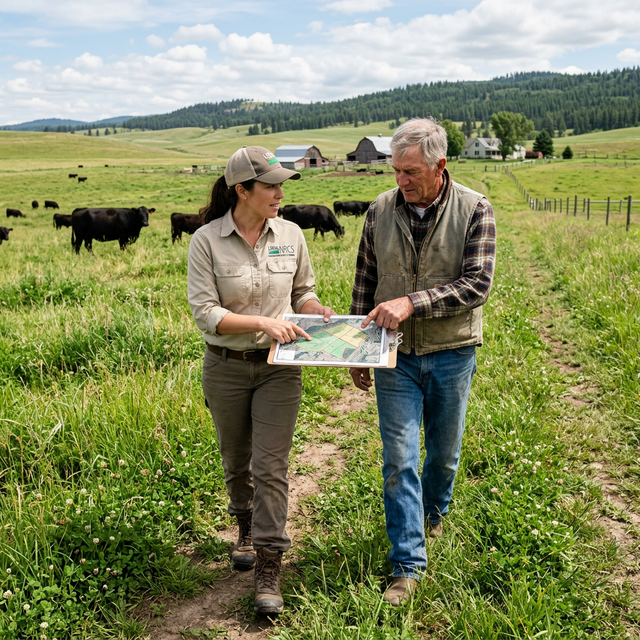
- Cross-Fencing (Practice 382): High-tensile or electric fencing used to divide a large pasture into smaller paddocks for rotational grazing.
- Livestock Pipeline & Watering Facilities (Practices 516/614): Burying water lines and installing heavy-duty water troughs so livestock don't have to drink from (and destroy) natural creeks and ponds.
- Forage Harvest Management (Practice 511): Financial incentives to delay haying until late summer to protect nesting ground birds like turkey and quail.
For Woodland Owners
- Forest Stand Improvement (Practice 666): Paying for the labor to thin overcrowded woods, complete crop-tree release, or create wildlife snags.
- Brush Management (Practice 314): Heavy herbicide application or mechanical forestry-mulching to eradicate invasive species like Autumn Olive, Honeysuckle, or Privet.
- Prescribed Burning (Practice 338): Financial assistance to hire professionals or build firebreaks for a controlled burn.
For Small Farms and Homesteads
- High Tunnels (Practice 325): The famous "free greenhouse" program. Covers the cost of large, unheated hoop-houses to extend the vegetable growing season.
- Cover Crops (Practice 340): Financial incentives (paid per acre) to plant multi-species cover crops to build soil health.
- Conservation Cover (Practice 327): Paying to convert marginal cropland or bare dirt into permanent, native pollinator habitat.
How Much Does EQIP Pay?
EQIP is not a grant—it is a cost-share reimbursement program.
You do the work (or hire a contractor), you pay the bill, the NRCS inspects the work to ensure it meets their engineering standards, and then the NRCS cuts you a check.
The Payment Rates: You are paid based on a flat, regional "Payment Schedule," not on your actual receipts.
- The standard rate is designed to cover roughly 50% to 75% of the estimated average cost of the project.
- If you qualify as a "Historically Underserved Producer" (which includes Beginning Farmers with less than 10 years of experience, Veterans, or Limited Resource Farmers), your payment rate jumps to 75% to 90% of the estimated cost.
Example: If the NRCS estimates a new fence costs $2.00 per foot to build, and you contract to build 1,000 feet, the standard payment might be $1,500. If you build the fence yourself for $1,000 using used posts, the NRCS still cuts you a check for $1,500.
The 5-Step Application Process
EQIP is a massive federal bureaucracy, so patience is required. The timeline from your first phone call to signing a contract usually takes 6 to 12 months.
Step 1: Establish Your Farm Records
You cannot apply until the USDA knows you exist.
- Go to your local Farm Service Agency (FSA) office (usually located in the same building as the NRCS).
- Bring your property deed and your social security number (or LLC/Trust EIN).
- Tell them you need a "Farm and Tract Number." This simply registers your property in their mapping system; it does not change your tax status.
Step 2: The Site Visit
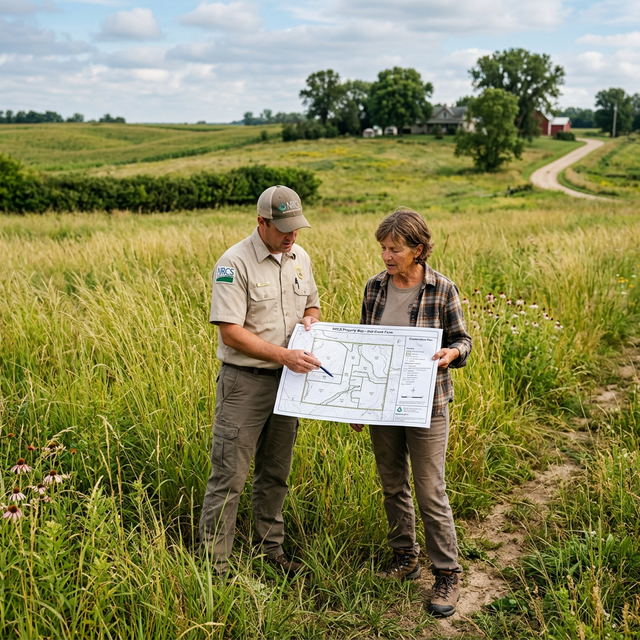
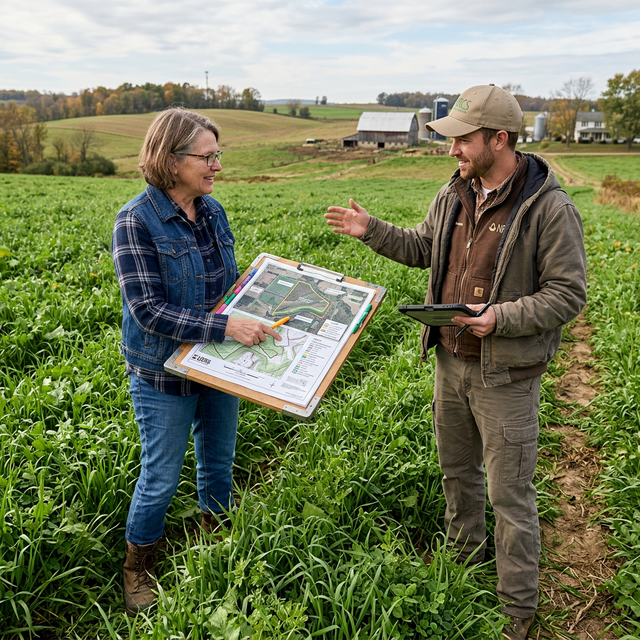
Walk down the hall to the NRCS office. Tell the District Conservationist you want to develop a Conservation Plan.
- The planner will schedule a free visit to your property.
- Pro Tip: Do not start by saying, "I want free money for a fence." Start by saying, "I have severe erosion on this creek bank because the cows are in it, and I need technical advice on how to fix it."
- The planner will walk the land, identify "resource concerns" (erosion, invasive species, degraded plant condition), and write a formal Conservation Plan suggesting solutions.
Step 3: Apply for EQIP
Once you have the Conservation Plan, you select which specific practices you want to implement and submit an EQIP application (Form CPA-1200). Applications are accepted year-round, but there are specific "batching periods" (usually in the fall) when applications are ranked and funded for the coming year.
Step 4: The Ranking Process
EQIP is highly competitive. There is never enough money to fund every application.
- Your application is given a "score" based on how much environmental benefit it provides.
- Fixing a massive erosion gully that dumps sediment into a town's drinking water reservoir will rank much higher than planting a half-acre of wildflowers in your backyard.
Step 5: Sign the Contract and Do the Work
If you are selected for funding, you sign a binding 1- to 10-year contract.
- CRITICAL: Do absolutely nothing until the contract is signed by the government. If you buy a gate, hire a tractor, or stick a shovel in the dirt before the contract is signed, that practice is immediately disqualified and you will not be paid.
- You have a specific timeline to complete each practice (usually year 1, year 2, etc.).
- Once finished, the NRCS inspects the work, you certify it, and direct deposit hits your bank account a few weeks later.
Summary
The EQIP program is the single most powerful financial tool you have to improve your land. While the process requires navigating federal paperwork and waiting for funding cycles, the payoff is transformative. It allows you to tackle massive conservation projects—like cross-fencing a 40-acre farm, installing solar water pumps, or eradicating 10 acres of invasive brush—that would be completely unaffordable out-of-pocket.
Take the first step today: locate your county's USDA Service Center and ask for an NRCS site visit to develop a Conservation Plan.
Explore more: Learn what programs you can graduate to in our guide to the Conservation Stewardship Program (CSP), or discover how a 5-Year Land Management Plan makes applying for EQIP much easier.
Sources & Further Reading
- USDA NRCS — Environmental Quality Incentives Program (EQIP): nrcs.usda.gov
- USDA Service Center Locator: offices.usda.gov
- National Sustainable Agriculture Coalition — EQIP Guide: sustainableagriculture.net
- Farmers.gov — Get Started Guide: farmers.gov/working-with-us
- USDA FSA — Establishing Farm Records: fsa.usda.gov
Written by Maria Rodriguez, Wildlife Biologist & Conservation Programs Advisor at LandHelp.info. Maria formerly worked as a USDA NRCS Soil Conservationist and now helps private landowners worldwide navigate the complexities of federal conservation funding.
Tags:
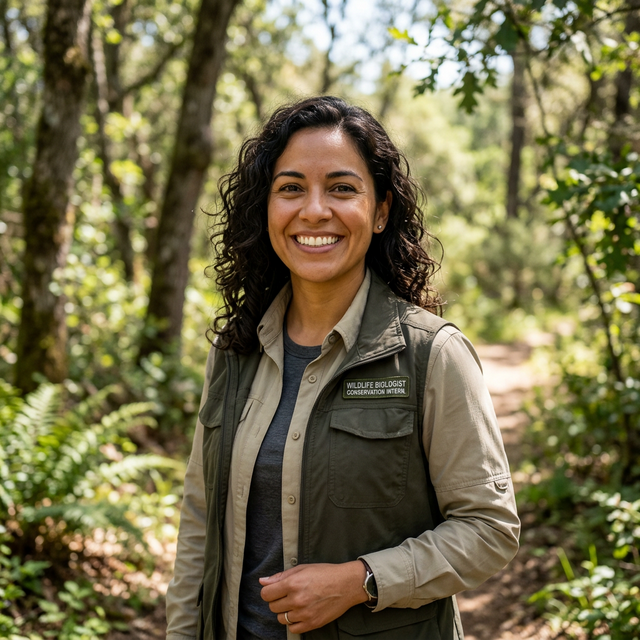
Maria Rodriguez
Wildlife Biologist & Conservation Programs Advisor
Maria specializes in wildlife habitat improvement and navigating conservation incentive programs. She has helped hundreds of landowners access NRCS programs and improve habitat on their properties.