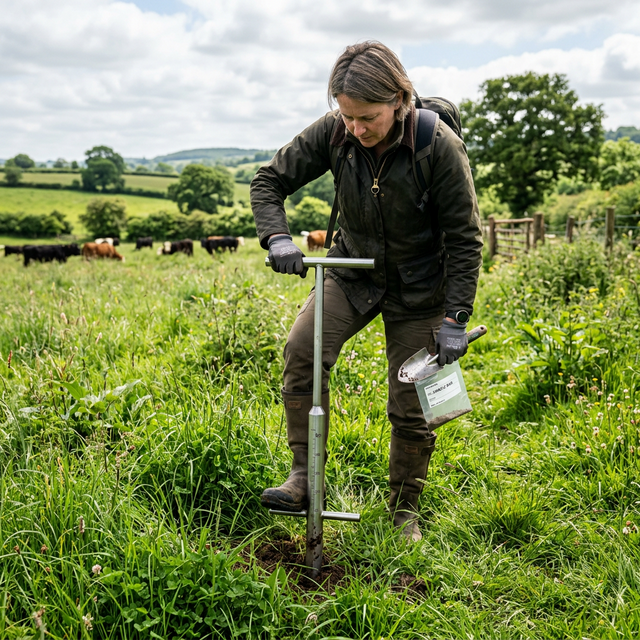
Composting Animal Manure Safely: Avoiding Weed Seeds & Pathogens
Turn liability into fertility. Learn the strict science of thermophilic (hot) composting to safely transform raw animal manure into rich garden soil.
Composting Animal Manure Safely: Avoiding Weed Seeds & Pathogens
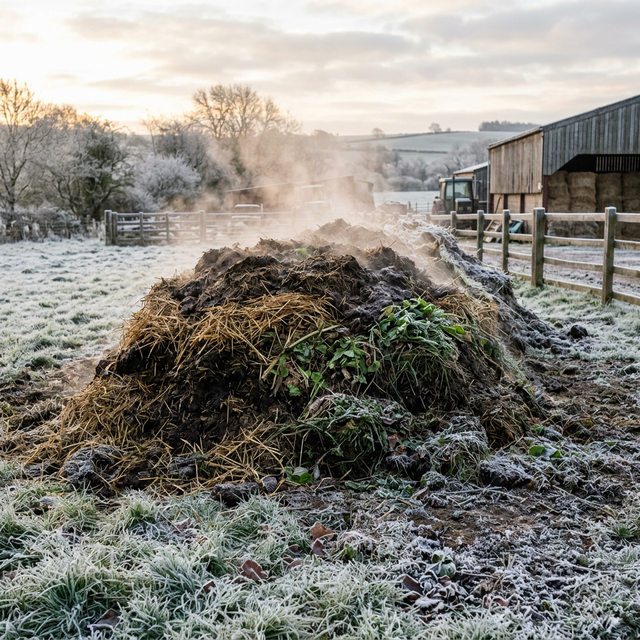
If you own horses, chickens, cows, or goats, manure management is a relentless daily chore. For many rural landowners, the default solution is to scrape out the barn and dump a towering, wet pile of raw manure behind the garage, leaving it to rot. Even worse, some spread it straight from the stall directly onto their vegetable gardens.
Applying raw (uncomposted) manure to a garden is a catastrophic error. Raw manure contains dangerous levels of E. coli and Salmonella. It is highly acidic, loaded with excess ammonia that will literally "burn" and kill tender plant roots, and worst of all, it acts as a delivery system for millions of viable weed seeds directly into your pristine vegetable beds.
To turn this liability into "black gold," you must compost the manure. However, traditional slow, cold composting (just piling it up for a year) will not kill pathogens or weed seeds. To guarantee safety, you must practice thermophilic (hot) composting. Here is the exact science to achieve it on a small farm.
1. The Science of the "Hot Pile"
Composting is not rotting; it is a highly active biological farming process. You are breeding billions of thermophilic (heat-loving) bacteria. As these bacteria rapidly consume the manure, their metabolism generates immense physical heat.
The Magic Number: 131°F to 145°F
To scientifically guarantee the death of E. coli, Salmonella, and virtually all noxious weed seeds (like pigweed, amaranth, and thistle), the core of the compost pile must reach a temperature of 131°F (55°C) for at least three consecutive days.
If you achieve temperatures between 140°F and 150°F, you will obliterate even the hardiest weed seeds and significantly accelerate the breakdown process. Warning: If the pile exceeds 160°F, it will kill the beneficial bacteria and turn into sterile ash. If it smokes or turns white inside, flip the pile immediately to cool it and add water.
2. Knowing Your Manures (The C:N Ratio)
To ignite the bacterial furnace, you must balance "Greens" (materials high in Nitrogen) with "Browns" (materials high in Carbon). The ideal ratio for a hot pile is to have roughly 25 to 30 parts Carbon for every 1 part Nitrogen (25:1 to 30:1).
Manures are wildly different from one another. Understanding their base chemistry dictates how you mix the pile.
"Hot" Manures (Extremely High Nitrogen)
These will burn your plants instantly if used raw. They decompose incredibly fast and act as rocket fuel for a compost pile.
- Chicken & Poultry Manure: The highest nitrogen content of all barnyard animals. It must be heavily mixed with carbon (like wood shavings or dry straw) to prevent the pile from becoming slimy and smelling like ammonia.
- Pig Manure: High in nitrogen, but carries significant zoonotic pathogen risks (parasites that can transfer to humans). Most experts advise against using pig manure in home vegetable gardens altogether.
"Cold" Manures (Moderate/Low Nitrogen)
These take much longer to break down and often contain very high volumes of weed seeds due to the animal's digestive system.
- Horse Manure: The most common problem source for homesteaders. Because horses digest poorly, their manure is basically just chewed-up grass and a million weed seeds. You must hot-compost horse manure, otherwise, spreading it on your garden is equivalent to planting a weed farm.
- Cow / Ruminant Manure: Better digested than horse manure, but still requires significant composting to reduce raw ammonia levels.
- Rabbit & Llama/Alpaca Manure (The Exceptions): These are uniquely "cool" manures. Their nitrogen is released very slowly in a highly stable format. You can theoretically apply rabbit manure directly to garden beds as a top-dressing without burning plants.
3. Constructing the Thermophilic Pile
You cannot build a hot pile by slowly tossing a single forkful of manure on it every day. To achieve terminal heat, you must build the pile all at once in a "batch."
- Critical Mass: The pile must be large enough to insulate its own core heat. The absolute minimum geometry is a 3-foot cube (3 feet wide, 3 feet deep, 3 feet tall). A 4x4x4 pile is optimal.
- The Lasagna Mix: Alternate layers of your high-nitrogen manure with high-carbon "browns" (like autumn leaves, straw, or the wood shavings from the stall mucking).
- Moisture Control: A hot pile must be as damp as a wrung-out sponge. When you squeeze a handful of compost, exactly one or two drops of water should come out. If it is soaking wet, it goes anaerobic and stinks. If it is bone dry, the bacteria die and the pile goes cold. Water the pile aggressively with a hose as you build each layer.
- The Essential Tool: Buy a 20-inch stainless steel compost thermometer (about $25). Plunge it into the core of the newly built pile. Within 48 hours, the temperature should spike from ambient air temperature to over 130°F.
4. Turning the Pile
The bacteria consuming the manure require massive amounts of oxygen. Within a few days, the core of the pile will run out of oxygen and the temperature will start to drop.
When the thermometer drops below 110°F, you must manually aerate the pile. Use a pitchfork to completely flip the pile over, moving the cooler outer edges into the hot, insulated core to ensure all weed seeds are eventually subjected to terminal heat.
- The pile will heat up again. When it drops, flip it again.
- After 3 to 5 flips, the manure and straw will be indistinguishable. The pile will smell like rich forest earth and will no longer spike in temperature. At this point, let it sit and "cure" for 4 to 6 weeks before applying to the garden.
5. Summary and Next Steps
Raw animal manure is an environmental hazard; composted manure is the cornerstone of sustainable agriculture. By balancing high-nitrogen stall mucking with carbon-rich bedding and strictly monitoring the core temperatures over 131°F, landowners can safely convert thousands of pounds of waste into weed-free, pathogen-free fertilizer.
Action Steps:
- Designate a specific, flat area away from water sources (to prevent nutrient runoff) for your new 4x4-foot composting bay. Use old pallets wired together as cheap, effective walls.
- Purchase a long-stemmed compost thermometer. It is the only way to verify pathogen destruction.
- Review your stall-cleaning routine. If you bed heavily with wood shavings but use lightweight poultry manure, you may need to add "green" materials (like fresh grass clippings) to the pile to achieve the correct Carbon:Nitrogen ratio for ignition.
For more information on closing the nutrient loop on your property, investigate Multi-Species Grazing and utilizing compost around Minimal Maintenance Food Forests.
Sources & Further Reading
- Cornell Waste Management Institute - Composting Fact Sheets: cwmi.css.cornell.edu
- Penn State Extension - Composting Horse Manure Checkpoints: extension.psu.edu
- USDA Natural Resources Conservation Service - Manure Management & Soil Health: nrcs.usda.gov
- Rodale Institute - The Fundamentals of Hot Composting: rodaleinstitute.org
Written by Tom Miller, Sustainable Living Expert at LandHelp.info. Tom specializes in off-grid permaculture systems and soil fertility, converting complex ecological cycles into actionable homesteading practices.
Tags:
Tom Miller
Sustainable Living Expert