Multi-Species Grazing: Real Benefits & Challenges on Small Farms
Discover how running cattle, sheep, goats, and chickens together can maximize pasture health and profit. A complete guide to multi-species grazing.
Multi-Species Grazing (Cattle + Sheep + Goats + Chickens): Real Benefits & Challenges
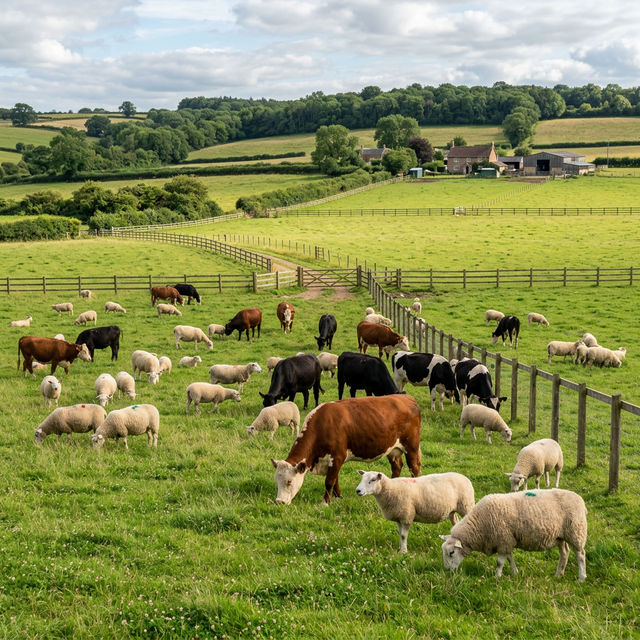
If you look closely at natural grassland ecosystems—like the African Serengeti or the historic American prairie—you never see a monoculture of animals. You see massive, diverse herds of grazers, browsers, and scavengers moving together across the landscape.
For the past century, conventional agriculture isolated livestock into single-species herds. But in 2026, as input costs rise and landowners focus on regenerative practices, multi-species grazing has returned as a powerhouse strategy for small and mid-sized properties. Running cattle, sheep, goats, and poultry across the same pasture isn't just an ecological novelty; it is a proven method to increase carrying capacity, break parasite cycles, and turn nuisance weeds into profitable protein.
Why is this crucial for small acreage owners? Because you have limited land. Multi-species grazing allows you to harvest different layers of forage from the exact same acre, maximizing profitability without overgrazing the soil. Here is the realistic breakdown of how to design a multi-species system and the distinct challenges you must prepare for.
1. The Ecological and Financial Benefits
Animals have different mouthparts, digestive systems, and forage preferences. By combining them, you utilize the entire "salad bar" of your pasture.
1. Niche Foraging (Weed Control)
- Cattle (Grazers): Prefer tall, mature grasses. They wrap their tongues around forage to tear it. They generally avoid broadleaf weeds.
- Sheep (Intermediate): Prefer tender, short grasses, clovers, and forbs (weeds). Their cleft lip allows them to nibble close to the ground.
- Goats (Browsers): Prefer woody brush, tree leaves, briars, and invasive shrubs (like multiflora rose or autumn olive). They eat standing up.
If you only run cattle, broadleaf weeds and brush will eventually take over the pasture, requiring expensive chemical herbicides or diesel fuel to mow. If you run cattle, sheep, and goats together, the goats eat the brush, the sheep eat the weeds, and the cattle eat the grass. You turn weed-control expenses into sellable meat.
2. Breaking the Parasite Cycle
Internal parasites (like the deadly Barber Pole worm in sheep) are highly species-specific. The worms that infect sheep generally do not survive in the digestive tract of cattle.
- If sheep graze a pasture and drop parasite larvae, those larvae crawl up blades of grass waiting to be eaten by another sheep.
- If cattle are grazing alongside the sheep (or immediately following them in a rotation), the cattle ingest the sheep parasites. The parasites die in the cattle’s rumen.
- Multi-species grazing acts as a biological "vacuum cleaner," drastically reducing the need for chemical dewormers.
3. Increased Carrying Capacity
Research from the USDA indicates that adding one sheep to every cow in a pasture herd does not decrease the amount of grass available to the cow, because the sheep are primarily eating the weeds and forbs the cow was ignoring. You can effectively increase your meat production per acre by 15% to 25% without buying more land.
2. System Design: Flherd vs. Leader-Follower
There are two primary ways to manage mixed species on your land.
The "Flherd" (Flock + Herd) System
Running all species together in one large, mixed group simultaneously.
- Pros: Easiest to manage regarding water infrastructure and fencing. You only have to move one group. Guardian dogs bonds with the whole group.
- Cons: Feeding supplemental minerals is extremely difficult (sheep are highly sensitive to copper toxicity, while cattle and goats require high copper). You must use "sheep-safe" minerals for the whole group, which may leave your cattle deficient.
The Leader-Follower System
Moving species sequentially through paddocks using rotational grazing.
- Example: Cattle move into a fresh paddock to eat the top canopy of grass. Two days later, the cattle are moved to the next paddock, and exactly one day later, chickens in a portable "egg mobile" follow behind them. The chickens aggressively scratch through the cow manure, eating fly larvae (sanitizing the pasture) and spreading the manure fertilizer evenly.
- Pros: Perfect mineral management. Phenomenal sanitation.
- Cons: Requires highly intensive management. You are moving multiple groups, multiple water troughs, and multiple portable fences every single day.
3. The Real Challenges (What Can Go Wrong)
Multi-species grazing is highly effective, but it is not a hands-off, magical cure-all. If you are starting out, be prepared for these significant hurdles.
1. The Fencing Nightmare
A 4-strand barbed wire fence will hold a 1,200-pound cow perfectly. A goat will walk through it without pausing, and a sheep will slide under it. To contain small ruminants (sheep and goats), you need robust perimeter fencing—typically woven wire (page wire) to the ground, or highly energized 5- to 7-strand high-tensile electric fencing. Retrofitting old cattle fences to hold sheep is often the single largest expense in converting to multi-species.
2. Predator Vulnerability
Coyote or neighborhood dog attacks on mature cattle are rare. Attacks on sheep, goats, and poultry are guaranteed unless protected. You must invest in Livestock Guardian Animals (LGDs like Great Pyrenees, or donkeys/llamas) and secure night-time containment.
3. The Copper Conundrum
As mentioned in the Flherd system, copper toxicity in sheep is fatal and irreversible. If you run cattle and sheep together, you cannot simply put out a generic mineral block. You must construct "creep feeders"—structures with openings tall enough for sheep to enter for their copper-free minerals, but blocking cattle; and tall troughs for the cattle's high-copper mineral that the sheep cannot jump into.
4. Summary and Next Steps
Multi-species grazing transforms a farm into an ecological engine, reducing weeds, breaking parasite cycles, and increasing revenue per acre. However, success requires significant upgrades to fencing infrastructure and careful management of minerals and predators.
Action Steps:
- Assess your perimeter fencing. If it won't hold water, it probably won't hold a goat. Price out woven-wire upgrades or portable electric netting.
- If you currently run cattle and struggle with weed pressure, consider starting small by adding 3 to 5 sheep to gauge fencing and predator loads.
- Establish a relationship with a large-animal veterinarian comfortable with small ruminants, as their health needs differ vastly from cattle.
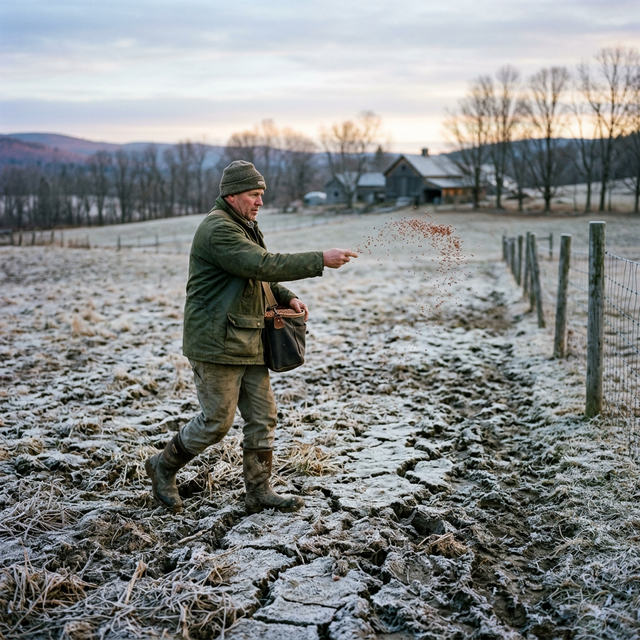
To ensure your pastures are healthy enough to support this intensive grazing, check out our guide on Rotational Grazing for Beginners and learn how to boost winter forage by Frost Seeding Legumes.
Sources & Further Reading
- ATTRA Sustainable Agriculture - Multispecies Grazing Guide: attra.ncat.org
- USDA Natural Resources Conservation Service - Pasture Management and Soil Health: nrcs.usda.gov
- University of Maryland Extension - Livestock Guardian Dogs: extension.umd.edu
- Savory Institute - Holistic Planned Grazing: savory.global
Written by Dr. Sarah Mitchell, Senior Editor & Land Management Specialist at LandHelp.info. Dr. Mitchell has implemented multi-species grazing on properties ranging from 10 to 5,000 acres, focusing on soil health and farm profitability.
Tags:

Dr. Sarah Mitchell
Senior Editor & Land Management Specialist
Dr. Mitchell has over 20 years of experience in natural resource management, with expertise in sustainable agriculture and forest stewardship. She holds a Ph.D. in Natural Resource Management from Colorado State University and has worked with the USDA NRCS for 15 years.