Frost Seeding Legumes into Pastures: When, How, and Which Varieties Work Best
A practical guide to frost seeding clovers and legumes into existing pastures to improve forage quality, fix nitrogen, and reduce fertilizer costs.
Frost Seeding Legumes into Pastures: When, How, and Which Varieties Work Best
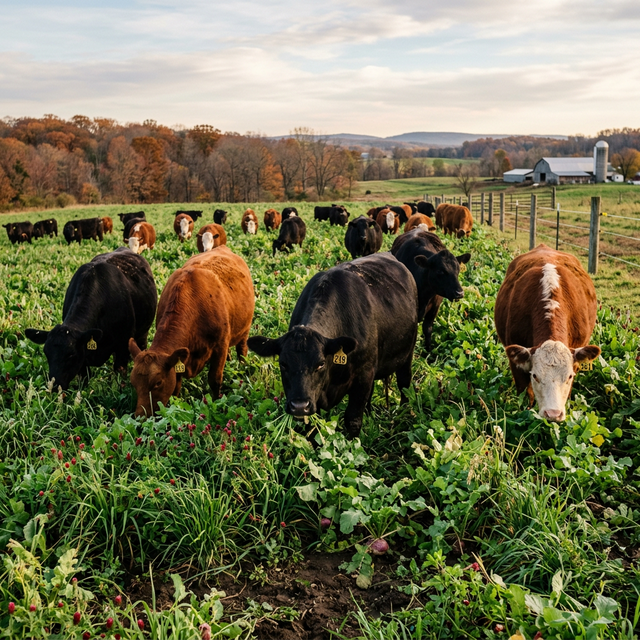
If you manage pasture or hayfields, the cost of synthetic nitrogen fertilizer remains a massive burden on profitability in 2026. Fortunately, nature provided a biological alternative: legumes. Plants like clover, alfalfa, and trefoil pull pure nitrogen out of the atmosphere and push it directly into the soil, feeding themselves and the grasses around them for free.
However, getting new clover established in an existing, thick sod of grass is incredibly difficult using normal drill-seeding methods. The grass simply out-competes the tiny clover sprouts.
Enter frost seeding—one of the cheapest, easiest, and highest-return practices a landowner can deploy. By using the freeze-and-thaw cycles of late winter to naturally bury seed into the soil, you can drastically boost the protein content of your forage and eliminate the need for synthetic nitrogen. This guide covers exactly how to execute a successful frost seeding plan.
1. The Science of Frost Seeding
Frost seeding relies on the physics of frozen soil. In late winter and very early spring, daytime temperatures begin to rise above freezing, causing the top layer of soil to thaw, turn muddy, and expand. At night, temperatures drop back below freezing, the ground contracts, and ice crystals form.
This daily expansion and contraction creates tiny cracks and heaves on the soil surface—often called "honeycombing."
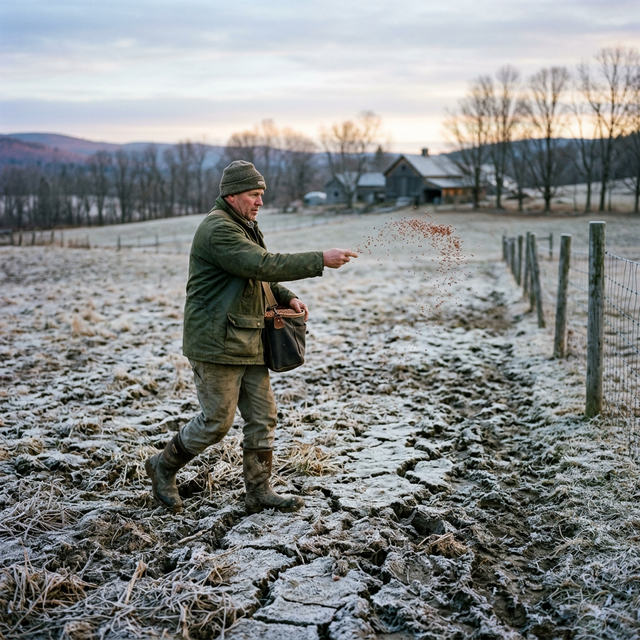
When you broadcast tiny, heavy seeds (like clover) onto this frozen, honeycombed soil, the natural freeze/thaw action slowly works the seed down into the cracks, giving it excellent seed-to-soil contact. When the ground finally warms in the spring, the seed germinates right as the spring rains arrive, safely tucked below the surface.
Why it Beats Tilling
Frost seeding requires zero tillage, meaning you don't destroy your existing pasture ecology, you don't burn expensive diesel running heavy equipment, and you don't expose your topsoil to spring erosion. You just need a $30 hand-crank broadcast seeder and a frosty morning.
2. Choosing the Right Seed
Frost seeding only works with seeds that are small, dense, and germinate well in cool soils. Large, light fluffy seeds (like most native warm-season grasses) will simply sit on top of the soil and become bird food.
Legumes are the undisputed kings of frost seeding.
Top Picks for Frost Seeding
- Red Clover (Medium Red): The absolute gold standard for frost seeding. It establishes quickly, has high "seedling vigor," yields heavy forage, and fixes massive amounts of nitrogen (up to 100 lbs of N per acre per year).
- Ladino (White) Clover: An excellent companion to Red Clover. Ladino handles heavy grazing pressure better because it spreads via runners along the ground.
- Birdsfoot Trefoil: Exceptional for poor, wet, or acidic soils where clover struggles. It contains natural tannins that prevent bloat in ruminant livestock. However, it takes much longer to establish and has low seedling vigor compared to red clover.
The Problem with Alfalfa and Grasses
Do not waste money frost seeding alfalfa; its seedling vigor in cold soil is too low to compete with existing sod. Similarly, most cool-season grasses (like Orchardgrass or Fescue) have light, fluffy seeds that do not fall deeply enough into the frost cracks to achieve good soil contact. Stick to the clovers.
3. The 4 Steps to Successful Frost Seeding
Frost seeding is cheap, but it requires precise timing and pasture preparation. If you broadcast seed into 6 inches of dead, matted grass, the seed will never touch the dirt and will die.
Step 1: Suppress the Existing Sod (Fall Preparation)
The success of frost seeding is largely determined the previous autumn. To ensure the seed hits bare dirt, you must suppress the existing grass canopy.
- Hard-graze the pasture late in the fall, taking the grass down to 2-3 inches.
- You want the pasture to look "beat up" going into winter, exposing bare patches of soil.
Step 2: Perfect Timing
You must seed during the "freeze/thaw" window. In the Midwest and Northeast, this is typically mid-February through mid-March.
- The Ideal Day: Seed early in the morning when the ground is frozen solid (so you don't compact the soil by walking or driving an ATV on it). As the sun comes up and the ground thaws into mud, the seeds will sink in.
Step 3: Broadcast the Seed
The recommended rate for a clover mix is typically 6 to 8 pounds per acre (e.g., 5 lbs Red Clover + 2 lbs White Ladino).
- Inoculation: Legumes must be coated with specific rhizobium bacteria to successfully fix nitrogen. Always buy "pre-inoculated" seed, or buy the inoculant powder and mix it with a splash of soda (sugar helps it stick) in a bucket before broadcasting.
Step 4: Spring Grazing Management (Crucial)
When spring arrives, the existing grass will explode with growth, shading out your tiny new clover seedlings.
- You must "flash graze" the pasture early in the spring. Put livestock in to quickly eat the tops off the rapidly growing grass (to let sunlight hit the ground), then remove the animals before they bite low enough to nip the new clover.
4. Summary and Next Steps
Frost seeding is the ultimate "work smarter, not harder" pasture improvement technique. By leveraging natural freeze-and-thaw cycles, you can inject deep-rooted, nitrogen-fixing clovers into tired pastures, massively increasing forage protein and cutting chemical fertilizer reliance.
Action Steps:
- Assess your pastures late this fall. Identify areas with weak stands and plan to graze them hard before winter sets in.
- Order your inoculated Red and White clover seed early (January) before local co-ops sell out of the best varieties.
- Monitor the weather in February. When you see a week of 25°F nights and 40°F days, grab your hand seeder.
To learn more about utilizing this improved forage, explore our guides on Multi-Species Grazing and Imrpoving Soil Health.
Sources & Further Reading
- Penn State Extension - Frost Seeding Forages: extension.psu.edu
- University of Wisconsin-Madison Cooperative Extension - Frost Seeding Legumes and Grasses into Established Pastures: fyi.extension.wisc.edu
- USDA Natural Resources Conservation Service - Pasture Management Guide: nrcs.usda.gov
- ATTRA Sustainable Agriculture - Pasture, Rangeland, and Grazing Management: attra.ncat.org
Written by Tom Miller, Sustainable Living Expert at LandHelp.info. Tom specializes in low-input pasture management, utilizing biological processes like frost seeding to build resilient, profitable small farms.
Tags:
Tom Miller
Sustainable Living Expert