Micro-Orchards on 1–5 Acres: The Best Fruit & Nut Varieties for Beginners
Start a productive, low-maintenance micro-orchard on small acreage. Learn the absolute best disease-resistant fruit and nut trees to plant in 2026.
Micro-Orchards on 1–5 Acres: The Best Fruit & Nut Varieties for Beginners
If you picture an orchard, you likely envision endless, massive rows of towering apple trees requiring heavy machinery and toxic chemical spray rigs to manage. For decades, traditional orcharding was largely inaccessible to the 1-to-5 acre landowner due to the immense scale and intensive maintenance required to produce a perfect, blemish-free piece of fruit.
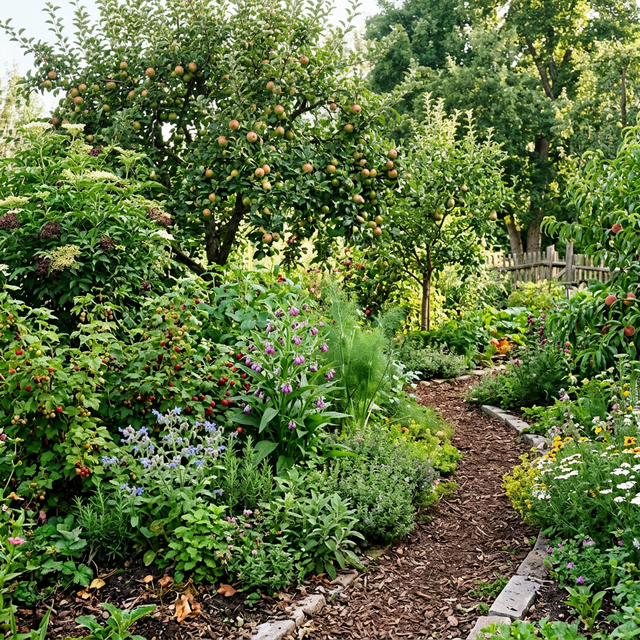
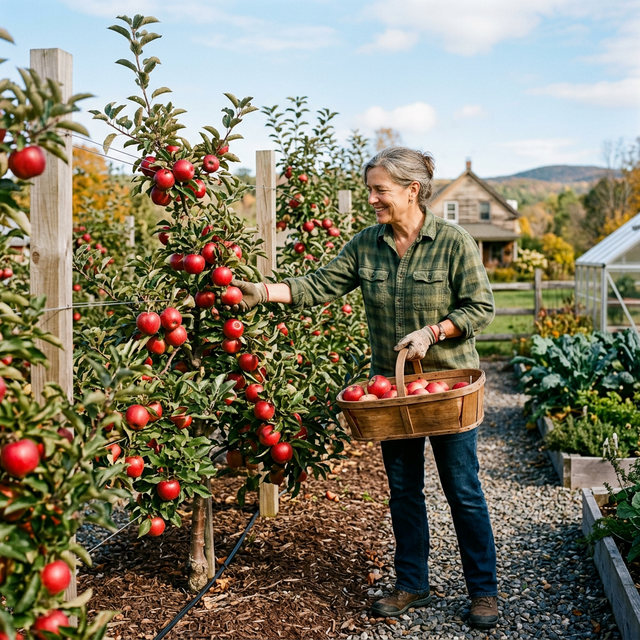
But the homesteading movement in 2026 has popularized the Micro-Orchard (or High-Density Planting). By utilizing ultra-dwarf rootstocks, intense pruning techniques, and selecting hyper-disease-resistant cultivars, a complete novice can grow a diverse cornucopia of organic fruits and nuts in a space smaller than a tennis court.
The single most critical decision you make when starting a micro-orchard is what tree you plant on day one. If you buy a generic "Honeycrisp" from a big-box hardware store, you will spend the next ten years fighting cedar apple rust, scab, and fire blight until you eventually cut the tree down in frustration. In this guide, we reveal the absolute best, bulletproof varieties designed to thrive with minimal chemical intervention.
1. The Secrets of the Micro-Orchard
Traditional apple trees space out 30 feet apart and grow 25 feet tall. You need a ladder to prune them and a tractor to spray them. A micro-orchard relies on three revolutionary concepts:
- Dwarf Rootstocks (The M.9 or B.9): The "rootstock" determines how big a tree gets. A tree grafted onto an ultra-dwarf rootstock will never grow taller than 8 or 10 feet. You can prune and harvest the entire tree while standing on the ground.
- High-Density Spacing: Because they are so small, dwarf trees can be planted incredibly close together—often just 3 to 5 feet apart in a row. You can fit 20 different varieties of fruit into a narrow 60-foot property line.
- Succession Harvesting: Instead of planting six of the same tree (which will overwhelm you with 300 pounds of apples all on the exact same weekend in October), the micro-orchard mixes early, mid, and late-season varieties. You harvest a small, manageable bowl of fresh fruit every week from July through November.
2. Bulletproof Apple Varieties
Apple trees are notoriously pest-prone. Scab causes the leaves to fall off in mid-summer; Cedar Apple Rust turns them bright orange; Fire Blight turns the branches black and kills the tree overnight. If you want a low-spray orchard, you must plant PRIA-bred (disease-immune) varieties.
- Liberty (Mid-Season): The king of the low-spray orchard. Completely immune to apple scab and cedar apple rust, and highly resistant to fire blight. It is crisp, tart-sweet (similar to a Macoun), and excellent for fresh eating and cider.
- Enterprise (Late-Season): Massive red apples with thick skin that stores in a root cellar for 5-6 months. Nearly bulletproof against all major diseases.
- GoldRush (Very Late Season): The absolute best-tasting disease-resistant apple. It is a tart, complex yellow apple that sweetens dramatically in storage. It heavily resists scab and mildew (though slightly susceptible to rust).
3. The Stone Fruits (Peaches, Cherries, Plums)
Stone fruits are far harder to grow organically than apples because they are extremely susceptible to fungal rots (like Brown Rot) and insect borers.
- Peaches (Reliance or Contender): If you live in a cold climate (Zone 4-5), peach buds typically die in late spring frosts. Reliance and Contender bloom fiercely late, missing the frosts and guaranteeing a crop. Keep them pruned into an open "vase shape" to maximize airflow and combat Brown Rot.
- Tart Cherries (Montmorency): Sweet cherries (like Bing) are a nightmare for beginners—they split in the rain and birds eat them instantly. Tart pie cherries like Montmorency are vastly more disease-resistant, self-pollinating (you only need one tree), and the birds generally leave them alone until they are fully ripe.
- Plums (Methley or Santa Rosa): The Methley plum is an early-ripening Japanese variety that handles heat and humidity exceptionally well. It is self-fertile and produces massive, weeping clusters of sweet, purple fruit.
4. Low-Maintenance Nut Trees & Shrub Fruits
If you want true "plant it and forget it" crops, look beyond the traditional orchard fruits.
The Shrub Fruits
These should be planted in the understory of your taller fruit trees as part of a Food Forest Guild.
- Serviceberry (Amelanchier): Also known as Juneberry. A native North American shrub that produces blue berries that taste like a mix of blueberry and almond. Entirely disease-free.
- Elderberry (Sambucus canadensis): Fast-growing native that produces massive clusters of medicinal berries. Just ensure you plant two different varieties (like Adams and Johns) for cross-pollination.
The Fast-Producing Nuts
Traditional walnuts take 15 years to produce a crop. In a micro-orchard, you want speed.
- American Hazelnut (Corylus americana) or Filberts: Hazelnuts grow as bushes, reaching 10-15 feet. They are wildly productive, start bearing nuts in just 3-4 years, and are almost entirely ignored by deer.
- Blight-Resistant Chestnuts: Look for Dunstan Hybrids or Chinese Chestnuts. They grow rapidly, produce highly caloric, staple-crop carbohydrates, and drop their nuts cleanly to the ground for easy harvest.
5. Summary and Next Steps
Starting a micro-orchard is an incredible investment in your property's self-sufficiency. By meticulously avoiding highly bred grocery-store varieties (like Fuji or Honeycrisp) and instead selecting rugged, disease-immune cultivars planted on dwarf roots, you guarantee decades of abundant harvests with a fraction of the labor.
Action Steps:
- Determine your exact USDA Hardiness Zone (e.g., Zone 5b or Zone 7a); fruit trees will permanently die if planted in the wrong climate zone.
- Order bare-root trees from reputable nurseries in January for a spring planting. Nurseries frequently sell out of disease-resistant varieties by February.
- Prepare the planting site now by aggressively killing the turfgrass in a 4-foot circle where each tree will go, top-dressing heavily with compost and woodchips.
For a deeper dive into organizing these trees into sustainable, multi-layered ecological systems, read our comprehensive guide on Creating Food Forests with Minimal Maintenance.
Sources & Further Reading
- Purdue University Extension - Disease Resistant Apple Cultivars: extension.purdue.edu
- University of California Agriculture and Natural Resources - Backyard Orchard Culture (High Density Planting): homeorchard.ucanr.edu
- Stark Bro's Nurseries - Understanding Fruit Tree Rootstocks: starkbros.com
- Cornell Cooperative Extension - Tree Fruit Production for the Home Gardener: cce.cornell.edu
Written by Tom Miller, Sustainable Living Expert at LandHelp.info. Tom specializes in designing high-yield, low-input perennial food systems that blend traditional orcharding with modern permaculture techniques.
Tags:
Tom Miller
Sustainable Living Expert