Controlling Weeds in Pastures Without Chemicals – Mechanical and Biological Methods
Effective mechanical and biological weed control strategies for pastures. Learn how to manage thistles, brush, and toxic plants without relying entirely on herbicides.
Controlling Weeds in Pastures Without Chemicals – Mechanical and Biological Methods
If you own a pasture, you have a weed problem. For decades, the default response to thistles, ironweed, or encroaching brush has been to hook up the sprayer and apply broadleaf herbicides like 2,4-D or Grazon.
While chemicals have their place, relying on them as your only tool creates new problems: they kill beneficial legumes (like clover), damage soil biology, carry grazing restrictions, and are increasingly expensive. Worse, if you don't fix the underlying cause of the weeds, they will simply grow back next year.
The most successful pasture managers use integrated weed management — focusing on mechanical controls, biological controls, and cultural changes to outcompete weeds naturally. Here is how to control pasture weeds without relying entirely on the spray tank.
Mindset Shift: Weeds are Symptoms, Not the Disease
Weeds don't cause poor pasture; poor pasture causes weeds.
Nature uses weeds as a band-aid to cover bare soil. Every weed tells a story about your land management:
- Thistles and ironweed thrive in heavily grazed, compacted soils.
- Broom sedge indicates low soil pH (acidic) and low phosphorus.
- Buttercup favors wet, poorly drained soils that have been overgrazed in winter.
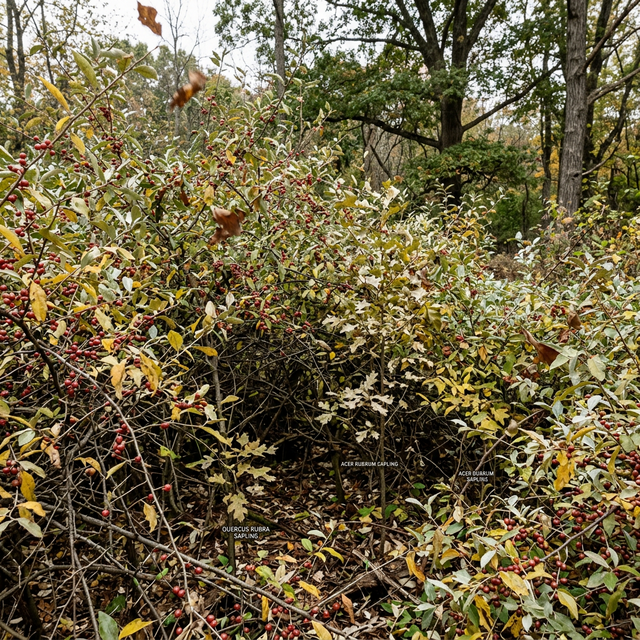
- Woody brush (cedar, locust) takes over when pastures lack periodic disturbance (like fire or intense grazing).
If you kill the weed without fixing the compaction, the pH, or the overgrazing, another weed will immediately take its place. The strongest weed control you have is a dense, healthy stand of desirable forage.
➡️ See our guide: Rotational Grazing for Beginners to learn how healthy grass crowds out weeds.
1. Mechanical Weed Control
Mechanical control involves physically removing or damaging the weed. Timing is everything.
Mowing / Bush-Hogging (The "Clipping" Method)
Mowing is the most common non-chemical weed control, but it is often done at the wrong time.
- The strategy: Wait until the weed is in the "boot" or early bud stage (just before it flowers). At this point, the plant has expended massive amounts of root energy to push up a stalk.
- The action: Cut it low. The plant will have to draw on its depleted roots to resprout.
- The follow-up: If you clip it again a few weeks later when it tries to reflower, you can starve the root system to death.
- Warning: Do not mow after weeds have gone to seed, or you are simply functioning as a mechanical seed spreader.
Grubbing and Hand-Pulling
For small infestations of noxious weeds (like a new patch of poison hemlock or a few musk thistles), nothing beats physical removal. Use a heavy mattock or a weeding tool to sever the taproot 2–3 inches below the soil surface. Doing this for 30 minutes a week can prevent a major infestation.
Weed Wipers
If you must use herbicide but want to avoid broadcast spraying, pull a "weed wiper" behind your ATV or tractor. A weed wiper is a sponge or rope soaked in herbicide suspended 6–12 inches above the pasture canopy. It physically wipes herbicide only onto the tall weeds sticking up above the grass, sparing your clovers and reducing chemical use by 80–90%.
2. Biological Weed Control: Using Livestock
Your livestock are living weed-control machines—if managed correctly.
Multi-Species Grazing
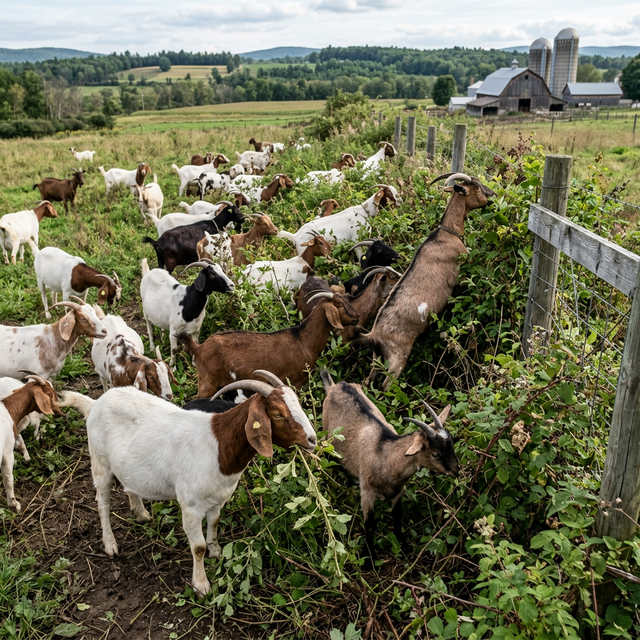
Different animals prefer different plants. Cattle prefer grass. Sheep prefer broadleaf plants (weeds, forbs). Goats prefer browse (woody brush, vines, trees).
If a pasture is overrun with blackberry, multiflora rose, and sumac, cattle will walk right past it. Put a herd of goats in that same pasture within a portable electric fence, and they will strip the brush bare, starving the root systems.
- Action: Consider running a small "flocker" mob of sheep or goats behind your cattle to clean up broadleaf weeds and brush.
High-Density "Mob" Grazing
In continuous grazing systems, livestock selectively eat the "ice cream" grasses and leave the "spinach" weeds. Over time, the weeds take over.
In high-density rotational grazing (putting many animals in a small area for 12–24 hours), animals must compete for food. They become less selective and will eat or trample weeds they normally ignore. The heavy hoof action also tramples weed stalks into the soil, acting as a biological bush-hog.
3. Biological Weed Control: Insects and Pathogens
Did you know state and federal agencies purposefully release insects to eat invasive weeds? This is classical biological control.
Scientists scour the native range of an invasive weed, find the specific insects that keep it in check, ensure those insects won't eat anything else, and release them in the U.S.
Success Stories:
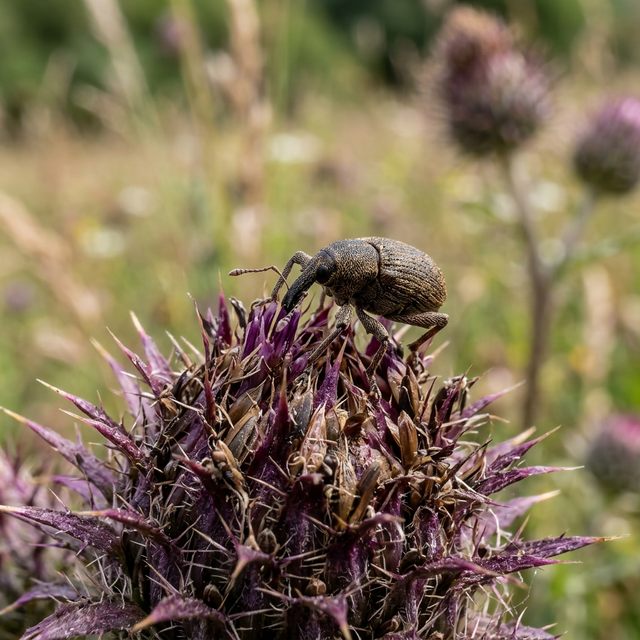
- Musk Thistle: The Musk Thistle Weevil (Rhinocyllus conicus and Trichosirocalus horridus) burrows into the flower heads and crowns of musk thistle, destroying seed production. In many states, this weevil has reduced musk thistle populations by 80–90%.
- Leafy Spurge: The Aphthona flea beetle has devastated millions of acres of leafy spurge in the West.
- Spotted Knapweed: Seedhead flies and root-boring weevils are actively used to control knapweed.
How to get them: Contact your local university extension office or state department of agriculture. They often track biological control release sites and can tell you if populations are active in your area, or help you source insects for release on your property.
4. Cultural Control: Changing the Soil Environment
As mentioned earlier, weeds are indicators of soil conditions. Change the condition, and the weed can no longer compete.
- Fix pH limitations: Broom sedge and curly dock thrive in acidic soils. Applying lime based on a recent soil test raises the pH, favoring desirable grasses and clovers that will eventually choke out the acid-loving weeds.
- Address compaction: If your pastures are dominated by deep-taprooted weeds (like dandelion, ironweed, or pigweed), they are trying to break up compacted soil. Introduce deep-rooted cover crops like tillage radish to do the job for them, while providing quality forage.
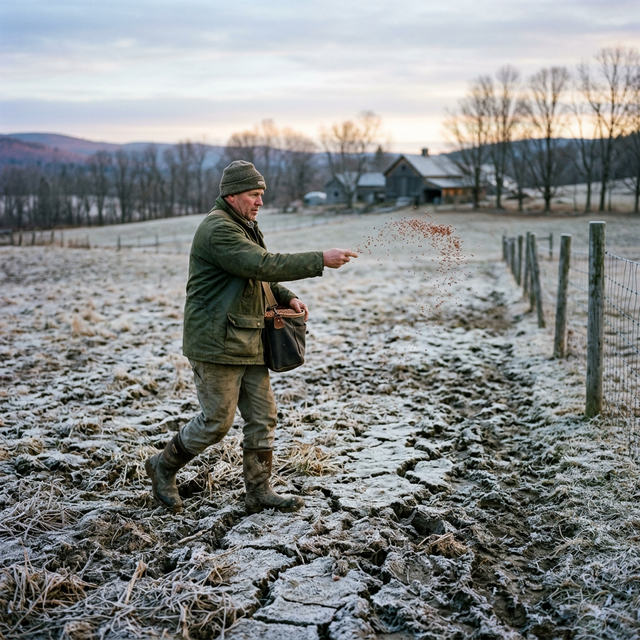
- Avoid bare soil: Nature hates bare soil. If you feed hay in the same spot all winter, it will be a weed patch in the spring. Broadcast clover or annual ryegrass seed over heavily trafficked areas before the spring weed emergence.
Designing a Non-Chemical Weed Strategy
Tackling weeds without an immediate spray rig requires patience. Here is a 3-year plan for a degraded pasture:
Year 1: Stop the bleeding.
- Implement a basic rotational grazing system to give grasses rest.
- Clip pastures with a bush-hog just before weeds flower to prevent seed set.
- Soil test and apply lime if needed.
Year 2: Change the competition.
- If brush is encroaching, consider leasing goats for the summer.
- Frost-seed clover in late winter to fill bare spots and fix nitrogen.
- Hand-chop or spot-treat highly toxic or noxious weeds before they spread.
Year 3: Let the grass win.
- Maintain rotational rest periods.
- The thickened grass stand will naturally shade out new weed seedlings.
- Accept that some non-toxic "weeds" (like plantain or dandelion) actually provide deep minerals and diversity to livestock diets. A perfect monoculture of grass is rarely the healthiest pasture.
Summary
Chemical herbicides are a tool, but they shouldn't be your only tool. By understanding why weeds are growing, utilizing strategic mowing, integrating multi-species grazing, and promoting healthy, dense stands of grass, you can control pasture weeds naturally while improving soil health and saving money.
Explore more: Browse our Rangeland & Pasture section or learn how to improve soil health with cover crops.
Sources & Further Reading
- ATTRA Sustainable Agriculture — Pasture Weed Management: attra.ncat.org
- USDA NRCS — Brush Management Practice Standard (314): nrcs.usda.gov
- University of Maryland Extension — Weed Control in Pastures Without Chemicals: extension.umd.edu
- Cornell University — Biological Control of Weeds: biocontrol.entomology.cornell.edu
- Understanding Ag — Regenerative Pasture Management: understandingag.com
- Noble Research Institute — Grazing for Weed Control: noble.org
Written by Dr. Sarah Mitchell, Senior Editor & Land Management Specialist at LandHelp.info. Dr. Mitchell holds a Ph.D. in Natural Resource Management and works extensively with regenerative livestock producers to reduce chemical dependence in pasture systems.
Tags:

Dr. Sarah Mitchell
Senior Editor & Land Management Specialist
Dr. Mitchell has over 20 years of experience in natural resource management, with expertise in sustainable agriculture and forest stewardship. She holds a Ph.D. in Natural Resource Management from Colorado State University and has worked with the USDA NRCS for 15 years.