Building and Maintaining a Small Pond: Step-by-Step Guide
Learn how to plan, build, and maintain a small pond on your private land. Step-by-step guide covering site selection, permits, dam construction, fish stocking, and water quality management.
Building and Maintaining a Small Pond: Step-by-Step Guide
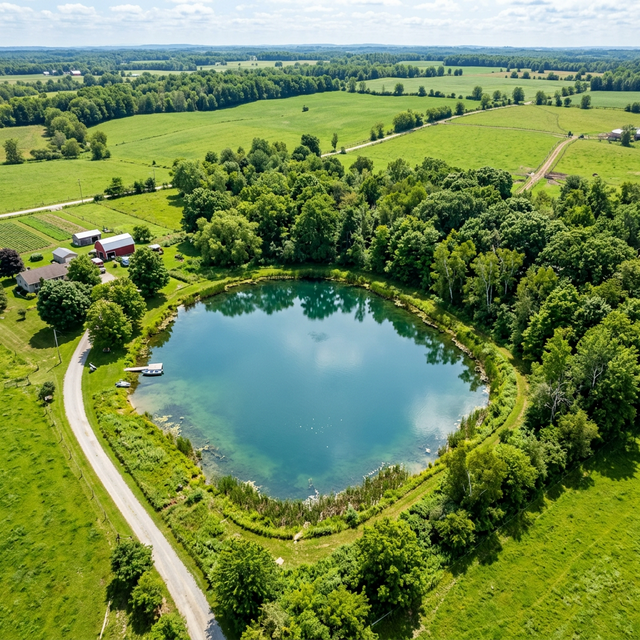
A well-built pond is one of the highest-value improvements a private landowner can make. It provides wildlife habitat, a water supply for livestock, recreational fishing, fire suppression water, and aesthetic value — often for decades with minimal maintenance. Done right, a 1–5 acre pond can transform a property.
Done wrong, it can wash out the first time it floods, breed algae blooms, or become a legal liability. The difference is in the planning.
This step-by-step guide covers everything a private landowner needs to know about building and maintaining a small pond — from site selection through long-term water quality management.
Is a Pond Right for Your Property?
Before anything else, answer these questions:
- Do you have the right topography? A valley or natural depression with a clear drainage area above it is ideal. You're capturing water that naturally flows to one point.
- Do you have clay-rich soil? Sandy or gravelly soils won't hold water without expensive lining.
- What's your watershed size? According to Penn State Extension, a pond needs 10–40 acres of watershed per surface acre of pond to maintain adequate water levels.
- Do you have the permits? In most states, pond construction requires at least a notification to your state's dam safety or environmental agency. Wetlands involvement triggers federal Section 404 permits.
Step 1: Site Selection
The best pond sites have:
- A natural depression or valley that minimizes the earthwork needed for the dam
- Clay or clay-loam soils in both the pond basin and dam area
- A defined watershed that provides sufficient runoff without excessive flooding
- No existing wetlands in the footprint (avoids federal permitting complications)
- Distance from sinkholes, tile drains, or rock outcrops that can cause seepage
Walk your property during or after a heavy rain. Where does water naturally pool or flow? That's your candidate site.
Tools for site analysis:
- USDA Web Soil Survey (soil texture and drainage class)
- USGS National Map (topography, watershed delineation)
- Google Earth Pro (historical imagery, terrain)
Step 2: Permits and Regulations
Never start construction without checking permits first. Requirements vary significantly by state, but typically you need:
| Situation | Likely Permit Required |
|---|---|
| Dam over 10 feet high | State dam safety permit |
| Pond over ~1 acre | May trigger state environmental review |
| Any fill in wetlands or navigable waters | Federal Section 404 permit (Army Corps) |
| Irrigation pond in Western states | State water rights permit |
Contact your:
- State dam safety office (search "[state] dam safety")
- USDA NRCS local office — they provide free technical assistance for pond planning and can help navigate permits
- Army Corps of Engineers district office if wetlands are involved
NRCS can also help fund pond construction through the EQIP program, covering 50–75% of construction costs in many states.
Step 3: Design Basics
Unless you have engineering experience, hire a professional pond designer or certified NRCS engineer for the dam design. Poorly designed dams fail — sometimes catastrophically.
Key design elements include:
Dam Design
- Minimum 8-foot top width for dams up to 15 feet high
- Upstream slope: 3:1 (3 feet horizontal for every 1 foot vertical)
- Downstream slope: 2:1 minimum
- Freeboard: At least 2 feet above the principal spillway elevation
- Anti-seep collar around the principal spillway pipe
Spillways
Two spillways are critical:
- Principal spillway (pipe/riser): Controls normal water level; connects to a pipe through the dam with an anti-seep collar
- Emergency spillway (earthen): Handles extreme flood events; typically a grass-lined channel off to the side of the dam
Under-designed spillways are the #1 cause of small dam failures.
Step 4: Construction
Work with a licensed excavating contractor experienced in pond construction. The process typically follows this sequence:
- Clear and grub the dam and basin area
- Strip topsoil from the dam area (set aside for later)
- Excavate the core trench (cuts through topsoil into clay to prevent seepage under the dam)
- Install principal spillway pipe with anti-seep collar
- Compact the dam in 6-inch lifts with a sheepsfoot compactor — this is non-negotiable for structural integrity
- Shape the emergency spillway
- Revegetate immediately — exposed earth on a new dam will erode fast
Timing: Avoid construction during wet seasons. Early fall is often ideal — soil is workable, and new grass has time to establish before winter.
Step 5: Filling and Initial Management
New ponds fill slowly and often have water quality issues in year 1. Here's what to expect:
- Murky water is normal for the first 1–2 seasons as suspended sediment settles
- Don't stock fish immediately — wait until the pond has been holding water for at least one full season
- Establish shoreline vegetation using native grasses and sedges to stabilize banks and filter runoff
First-Year Checklist
- Monitor for any seepage on the downstream face of the dam
- Check spillways after every heavy rain
- Remove large woody debris from the inlet area
- Begin establishing native shoreline plants
- Test water pH and alkalinity before stocking fish
Step 6: Fish Stocking
Proper fish stocking creates a balanced, self-sustaining fishery. The classic combination for warm-water ponds in most of the U.S.:
| Species | Stocking Rate (per acre) | Purpose |
|---|---|---|
| Largemouth bass | 100 fingerlings | Top predator |
| Bluegill | 500 fingerlings | Primary forage, sport |
| Channel catfish | 50–100 fingerlings | Bottom structure |
| Fathead minnows | 5–10 lbs | Early forage base |
Stocking sequence: Add fathead minnows first (spring), then bluegill in fall, then bass the following fall. This gives forage fish time to establish before introducing predators.
Source fish from a reputable, licensed fish hatchery — not from a neighbor's pond, which may introduce diseases or undesirable species.
Long-Term Maintenance
A well-built pond requires ongoing attention:
Annual Tasks
- Inspect the dam after spring runoff — look for cracks, soft spots, or seeping water
- Test water quality — pH, alkalinity, dissolved oxygen in summer
- Manage aquatic vegetation — some is good; dense coverage signals nutrient overload
- Maintain spillways — keep emergency spillway clear of brush
Common Problems and Solutions
| Problem | Likely Cause | Solution |
|---|---|---|
| Turbid (muddy) water | Erosion from watershed or livestock access | Fence livestock out; apply agricultural lime |
| Excessive algae | High nutrient runoff (fertilizer, manure) | Riparian buffer; reduce inputs upstream |
| Low fish population | Overfishing or oxygen depletion | Reduce catch; consider aerator |
| Seepage through dam | Poor compaction or animal burrows | Consult engineer immediately |
Summary
A small pond is one of the most rewarding investments a landowner can make — but it requires careful planning, proper permitting, professional design, and ongoing maintenance. Start with a site assessment and a conversation with your local NRCS office, where free technical assistance and potential cost-share funding are both available.
Explore more: Browse our Water Resources section or learn about water rights basics for private landowners.
Sources & Further Reading
- Penn State Extension — Pond Management Handbook: extension.psu.edu/pond-management
- USDA NRCS — Pond Conservation Practice Standard: nrcs.usda.gov
- Virginia Cooperative Extension — Farm Pond Construction: ext.vt.edu
- US Army Corps of Engineers — Regulatory Program (Section 404): usace.army.mil
- Alabama Cooperative Extension — Pond Stocking Guide: aces.edu
- Oklahoma State Extension — Small Pond Management: extension.okstate.edu
- USDA EQIP — Pond Construction Cost-Share: nrcs.usda.gov/programs-initiatives/eqip
Written by Prof. James Chen, Contributing Expert – Water Resources at LandHelp.info. Professor Chen holds a Ph.D. in Hydrology and has 25+ years of experience in watershed management and water conservation research.
Tags:

Prof. James Chen
Contributing Expert - Water Resources
Professor Chen is a leading expert in watershed management and water conservation. With 25 years in academic research and extension, he has published extensively on sustainable water management practices for agricultural lands.
You Might Also Like
Related Resources
External tools, guides, and references related to this topic
Pond Management Handbook
Comprehensive guide to pond construction, stocking, and management. Covers everything from site selection to fish stocking rates and water quality management.
NRCS Wetland Restoration
Technical guides and financial assistance programs for wetland restoration on private lands. Includes design specifications and plant selection guides.
Water Rights Database
Interactive database for researching water rights by state. Essential for understanding your legal water usage rights and restrictions.
Irrigation System Design Calculator
Free online calculator for designing efficient irrigation systems. Calculates flow rates, pressure requirements, and pipe sizing.