Building Brush Piles and Snags for Small Mammals and Birds
Learn how to build effective brush piles and retain snags to instantly improve wildlife habitat. A low-cost, high-impact guide for private landowners supporting songbirds and small mammals.
Building Brush Piles and Snags for Small Mammals and Birds
If you walk through a manicured, park-like woodland where every dead branch has been hauled away and every fallen log burned, you will notice something striking: it is quiet.
Wildlife needs "messiness." Structural complexity—specifically deadwood on the ground and deadwood standing in the air—is the foundation of cover and shelter for hundreds of species.
Bobwhite quail, cottontail rabbits, box turtles, and wintering sparrows rely on dense, low-to-the-ground cover to escape foxes, hawks, and freezing winds. Woodpeckers, owls, and flying squirrels rely on standing dead trees (snags) for nesting.
If your property lacks this structural cover, you can create it in an afternoon. Building a proper brush pile or intentionally leaving snags are two of the cheapest, fastest, and most effective wildlife improvements a landowner can make. Here is how to do it right.
The Art of the Brush Pile
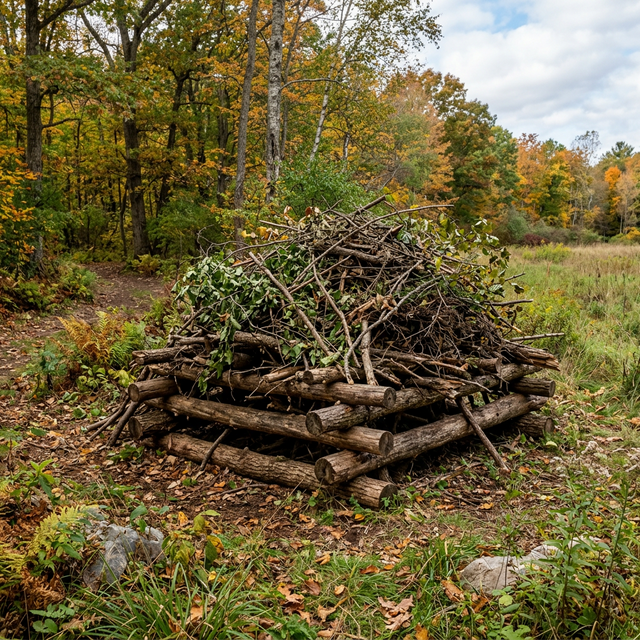
A wildlife brush pile is not just a haphazard mound of yard waste meant for a bonfire. A proper brush pile is an engineered structure designed to last for a decade, featuring a sturdy foundation with travel tunnels, topped by a dense, weather-resistant roof.
Where to Build Them
Location is critical. A brush pile in the middle of a short-grass pasture is an island; a rabbit running to it is an easy target for a hawk.
- The best locations: Along natural travel corridors, such as the edge where a forest meets a pasture, near a stream buffer, or in the corner of a fence line.
- Spacing: Build one 10x10 foot brush pile every 2 to 5 acres to create a network of "escape rooms" across your property.
How to Build a Lifetime Brush Pile (Step-by-Step)
Most poorly built piles rot and collapse within two years because the small branches sink directly into the soil. You must build a foundation.
Step 1: The Foundation (The Logs) Gather 4 to 6 large logs (6–10 inches in diameter and 4–6 feet long). Place them parallel on the ground, about 8 to 12 inches apart. Then, lay a second tier of logs perpendicularly across the first tier. This "tic-tac-toe" or Lincoln-log base elevates the pile off the damp ground and creates secure, open tunnels for rabbits and quail to run through and escape predators.
Bonus tip: Place a few sections of 6-inch corrugated drain pipe inside the base before stacking the wood. It provides an indestructible predator-proof tunnel.
Step 2: The Core (The Limbs) Stack medium-sized branches (3–5 inches thick) loosely over the log foundation. Create a mound about 4 to 5 feet high. Leave enough space between the branches for birds to flit in and out.
Step 3: The Roof (The Brush) Top the mound with dense, small, leafy branches, pine boughs, or eastern red cedar limbs. This creates an "umbrella" that sheds rain and snow, keeping the core dry and blocking the wind. A good wildlife brush pile should be large—at least 6 feet across and 4 to 5 feet tall.
Edge Feathering: The Ultimate Brush Pile
If you have a hard edge where a mature forest abruptly meets a field, you can create a massive, continuous brush pile through a technique called edge feathering.
An abrupt "hard edge" offers terrible habitat. Predators can easily patrol the line. Instead, you want a "soft edge"—a transitional zone of thick brush, briars, and saplings.
How to edge-feather: Walk 30 to 50 feet into the woods from the field edge. Use a chainsaw to fell 70% to 80% of the low-value trees (leaving oaks and hickories). Do not cut them all the way through. Use a "hinge cut"—cutting 2/3 of the way through the trunk and pushing the tree over so the canopy rests on the ground, but the tree remains attached to the stump and stays alive for several years.
This creates an impenetrable thicket of living brush, immediate browse for deer, and perfect nesting cover for turkeys and songbirds.
The Value of Snags (Standing Dead Trees)
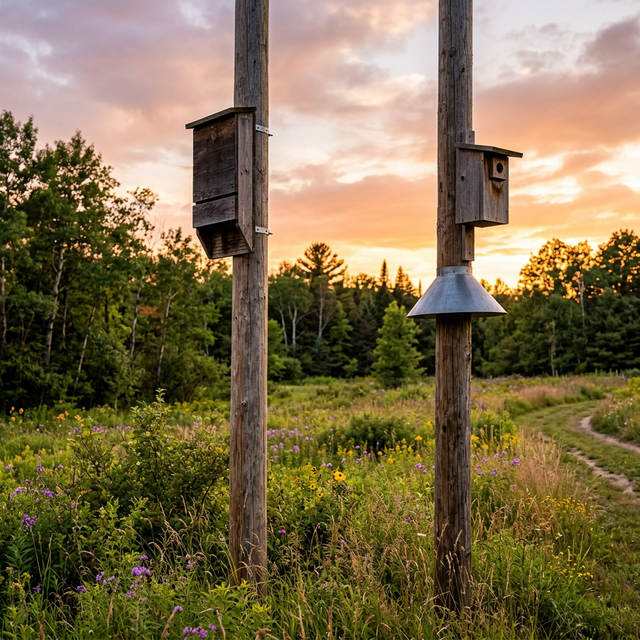
While brush piles provide cover on the ground, snags provide cover in the air.
A standing dead tree is often called a "wildlife apartment complex." Over 80 species of North American birds (including woodpeckers, bluebirds, wood ducks, and screech owls) are cavity nesters. They cannot build a nest on a branch; they require a hollowed-out hole in dead wood. Furthermore, bats—which eat thousands of mosquitoes a night—roost under the peeling bark of dying trees.
How to Manage for Snags
1. Resist the urge to "clean up." Unless a dead tree threatens a house, a barn, a road, or a fence, leave it standing. An oak snag can stand for 20 years, providing insect food for woodpeckers and nesting cavities for owls.
2. Girdle low-value trees to create snags. If your woodland is overcrowded and lacks deadwood, you can intentionally create snags. When culling invasive trees (like Tree of Heaven) or low-value crowding species (like sweetgum or red maple), don't fell them. Girdle them.
- Use a chainsaw or hatchet to cut a 2-inch wide ring entirely around the trunk, cutting deep enough to sever the cambium layer.
- The tree will die standing, shedding its leaves to let sunlight hit the forest floor, and immediately enter the decomposition cycle to feed insects and birds.
3. Aim for density. Wildlife biologists recommend maintaining a minimum of 3 to 5 large snags per acre (ideally 12+ inches in diameter) to support robust populations of cavity-nesting birds and mammals.
Funding Technicalities
The USDA Natural Resources Conservation Service (NRCS) recognizes the critical importance of structural habitat. Through the EQIP program, landowners can receive cost-share funding for practices like Upland Wildlife Habitat Management (Practice 645) or Forest Stand Improvement (Practice 666), which often officially incorporate edge feathering, snag creation, and brush pile construction into their funded management plans.
Summary
The easiest way to double the songbirds and small mammals on your property is to stop cleaning up after nature. Intentionally building sturdy, long-lasting brush piles and protecting standing dead snags provide the critical escape cover, winter shelter, and nesting habitat that manicured landscapes completely lack. Best of all, it requires nothing more than a chainsaw, a few hours of sweat equity, and materials you already have on your land.
Explore more: Learn how to attract even more species by Creating Pollinator Habitat with Native Plants or dive into identifying and removing the invasive species that threaten these habitats.
Sources & Further Reading
- Penn State Extension — Dead Wood for Wildlife: extension.psu.edu
- USDA NRCS — Fish and Wildlife Habitat Management: nrcs.usda.gov
- University of Missouri Extension — Edge Feathering for Bobwhite Quail: extension.missouri.edu
- The National Wildlife Federation — The Value of Dead Trees: nwf.org
- Virginia Department of Wildlife Resources — Provide Cover: dwr.virginia.gov
- Missouri Department of Conservation — Brush Piles: mdc.mo.gov
Written by Maria Rodriguez, Wildlife Biologist & Conservation Programs Advisor at LandHelp.info. Maria specializes in structural habitat improvement and helping landowners access USDA funding for upland wildlife conservation.
Tags:

Maria Rodriguez
Wildlife Biologist & Conservation Programs Advisor
Maria specializes in wildlife habitat improvement and navigating conservation incentive programs. She has helped hundreds of landowners access NRCS programs and improve habitat on their properties.