Succession Planning for Family Farms and Woodlots – Getting Started
A practical guide to succession planning for family farms and woodlots. Learn how to transfer land management and ownership to the next generation without losing the family legacy.
Succession Planning for Family Farms and Woodlots – Getting Started

More than 70% of U.S. farmland will change hands in the next 20 years, according to USDA Economic Research Service data. Yet surveys consistently show that fewer than one-third of farm families have a formal succession plan in place. The result? Family farms sold under estate pressure, heirs fighting over what grandpa intended, or productive woodlots broken up and developed because nobody planned ahead.
Succession planning isn't just about protecting money — it's about protecting your land, your family relationships, and the stewardship legacy you've built over decades.
This guide walks you through the essential steps to start a succession plan for your farm or woodlot, even if you're just beginning the conversation.
Why Most Farm Families Avoid This Conversation
Succession planning feels uncomfortable because it forces discussions about:
- Death and mortality
- Who is "favored" among heirs
- What the farm is really worth (often more than expected)
- How to treat heirs fairly when some are involved in farming and some aren't
These are hard conversations. But the cost of not having them is almost always higher — financially, legally, and emotionally.
The Three Pillars of Farm and Woodlot Succession
A complete succession plan addresses three interconnected areas:
1. Management Succession — Who Runs the Operation?
This is about transferring knowledge, decision-making, and day-to-day operations. Who will manage the timber stand? Who will oversee the grazing lease? Who knows where the property lines are and where the well is?
Management succession often starts years before ownership transfers. The incoming generation needs time to learn the operation, build relationships with neighbors and contractors, and develop their own management style.
Practical steps:
- Identify your successor(s) now — even if it feels early
- Give them increasing responsibility over a 3–5 year period
- Document your management practices (rotations, contractor contacts, lease details)
- Involve them in USDA program applications and renewals
2. Ownership Succession — Who Gets the Land?
This is the legal and financial transfer of property. Options include:
| Transfer Method | Best For | Key Considerations |
|---|---|---|
| Will/Inheritance | Simple estates | No control over timing; probate can be slow |
| Revocable Living Trust | Avoiding probate | More flexible; allows conditions |
| LLC or Partnership | Multiple heirs, active business | Liability protection; complex setup |
| Conservation Easement | Protecting land character | Tax benefits; permanent restrictions |
| Installment Sale | Heir purchasing from parent | Spreads tax burden; creates income stream |
| Life Estate Deed | Keeping control while alive | Simple; limited flexibility |
According to Iowa State University Extension, a revocable living trust combined with an LLC is often the most flexible structure for farm families with multiple heirs and an active land operation.
3. Financial Succession — Treating Heirs Fairly (Not Necessarily Equally)
This is where most farm succession plans break down. When land is the primary asset, leaving it equally to five children often means nobody keeps the farm — it gets sold to pay out shares.
Key strategies for equalization:
- Life insurance to provide cash to off-farm heirs while the farming heir receives land
- Buy-sell agreements that give on-farm heirs the right of first refusal
- Fair vs. equal: The heir who worked the land for 20 years may deserve more than an equal share
- Non-farm assets (retirement accounts, savings) directed toward non-farming heirs
Step-by-Step: Starting Your Succession Plan
Step 1: Have the First Conversation
Call a family meeting — not to announce decisions, but to open discussion. Questions to explore:
- Does anyone in the next generation want to farm or manage the woodlot?
- What do you (the current owner) want for the land after you're gone?
- Are there family members who expect to inherit but haven't been involved?
Be honest about what you don't know. "I don't have a plan yet, but I want to work on one together" is a perfectly good starting point.
Step 2: Inventory Your Assets
List everything:
- Land (acres, assessed value, current market estimate)
- Timber (species, board feet estimate if known)
- Equipment, livestock
- Cash, retirement accounts, life insurance
- Existing leases, easements, mortgages
Step 3: Assemble Your Team
No single professional handles all aspects of farm succession. You'll likely need:
- Estate attorney — drafts wills, trusts, deeds
- CPA — handles tax implications (capital gains, estate tax, depreciation recapture)
- Financial planner — coordinates insurance and retirement assets
- Farm business management consultant — helps with operating transfers
- USDA FSA/NRCS — for program transition guidance
Cost tip: Many land-grant universities offer free or low-cost farm succession workshops. Search "[your state] farm succession planning extension."
Step 4: Draft and Review the Plan
Once you have professional guidance, create a written plan that includes:
- Ownership transfer timeline and method
- Management transition schedule
- Buy-out provisions for non-farming heirs
- Land use restrictions you want to preserve
- Business structure documents
Review and update every 3–5 years, or after any major life change (marriage, divorce, death, birth of grandchildren).
Special Considerations for Woodlot Owners
Woodlots present unique succession challenges because:
- Timber is illiquid — you can't easily split a 40-acre woodlot among three heirs
- Long-term management matters — a poorly cut timber stand takes decades to recover
- Conservation may be a priority — many woodlot owners care more about wildlife habitat than timber income
Options for keeping woodlot forests intact:
- Conservation easements — work with a land trust to place permanent restrictions on development while maintaining family ownership indefinitely. Many easements qualify for significant federal income tax deductions.
- Timber trust or LLC — pool family ownership under a shared management agreement
- Sell a partial interest to a land trust — maintains family connection while providing cash for equalization
➡️ Learn more: Tax Incentives and Easements: Saving Money While Protecting Your Land
Red Flags: When to Act Urgently
If any of these apply, begin succession planning immediately:
- You are over 65 with no written succession plan
- A key landowner has been diagnosed with a serious illness
- Family disagreements about the land are already occurring
- A major tax law change is on the horizon (estate tax exemptions can change)
- You have a USDA program contract expiring within 5 years
Summary
Succession planning isn't a one-time event — it's an ongoing conversation and process that unfolds over years. The best time to start was 10 years ago. The second best time is today.
Begin with an honest family conversation, get a rough asset inventory together, and reach out to your state's land-grant extension service for low-cost guidance. The tools exist — the hardest part is simply starting.
Next steps: Explore our Planning & Land Management resources or download our Land Management Plan Template to document your current operation before beginning transition talks.
Sources & Further Reading
- Iowa State University Extension — Farm Succession Planning: extension.iastate.edu
- USDA ERS — Farmland Ownership and Tenure: ers.usda.gov
- National Agricultural Law Center — Farm Succession Resources: nationalaglawcenter.org
- Land Trust Alliance — Conservation Easement Basics: landtrustalliance.org
- USDA FSA Farm Loan Programs: fsa.usda.gov
- University of Nebraska Extension — Farm Transfer Planning: extension.unl.edu
- American Farmland Trust — Farmland Protection Resources: farmland.org
Written by Dr. Sarah Mitchell, Senior Editor & Land Management Specialist at LandHelp.info. Dr. Mitchell holds a Ph.D. in Natural Resource Management from Colorado State University and has 20+ years of experience in land management consulting and USDA program guidance.
Tags:
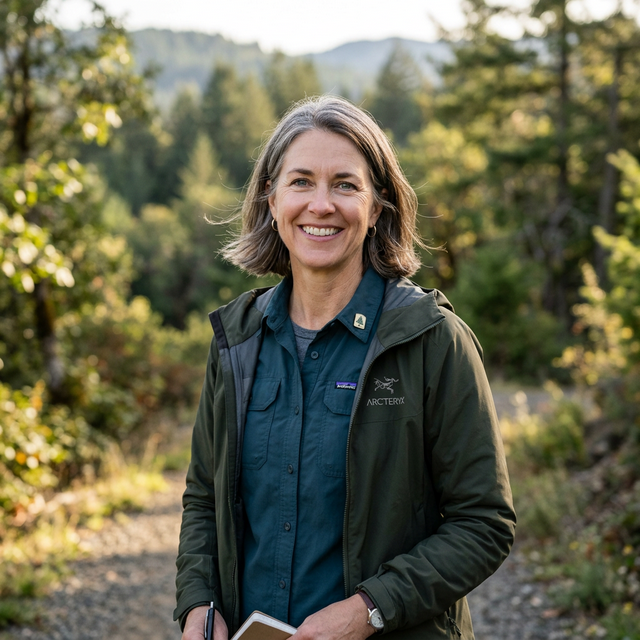
Dr. Sarah Mitchell
Senior Editor & Land Management Specialist
Dr. Mitchell has over 20 years of experience in natural resource management, with expertise in sustainable agriculture and forest stewardship. She holds a Ph.D. in Natural Resource Management from Colorado State University and has worked with the USDA NRCS for 15 years.
You Might Also Like
Related Resources
External tools, guides, and references related to this topic
Holistic Management: A New Framework for Decision Making
Allan Savory's seminal book on holistic management - the framework that helps land managers make decisions that are economically, environmentally, and socially sound. Essential reading for anyone managing grazing lands.
NRCS Conservation Planning
The USDA Natural Resources Conservation Service provides comprehensive guidelines for developing conservation plans. Includes worksheets, templates, and step-by-step planning processes.
Property Mapping with GIS
Learn how to create detailed property maps using free GIS tools like QGIS. Covers boundary mapping, resource inventory mapping, and creating management zones.
Land Succession Planning Guide
A practical guide for farm and ranch families on succession planning. Covers estate planning, transferring management to the next generation, and maintaining land in the family.