Managing Feral Hogs or Coyotes on Your Property Safely
Effective strategies for managing feral hogs, coyotes, and other predators on private land. Learn about trapping, exclusion fencing, and state-supported removal programs.
Managing Feral Hogs or Coyotes on Your Property Safely
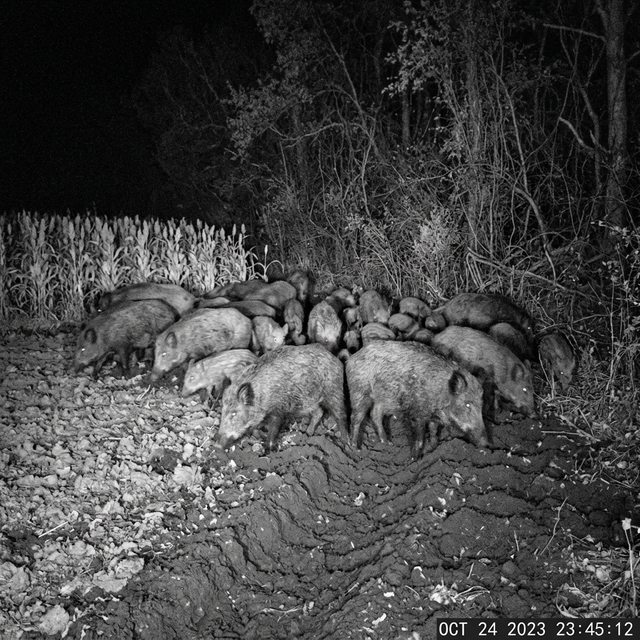
When an invasive or overpopulated predator species moves onto your property, the damage is swift and expensive. A sounder of feral hogs can destroy an acre of pasture overnight, wallow out a pristine spring, and consume every acorn a turkey might have eaten. A bold coyote pack can decimate a lamb crop, harass newborn calves, or eliminate heavy fawns in the spring.
The reaction of most landowners is to grab a rifle. But shooting individual animals is rarely an effective long-term management strategy for highly intelligent, prolific species.
Sustainable predator and pest management requires strategy: exclusion, whole-sounder trapping, and leveraging government resources. This guide covers the safest, most effective ways to manage feral hogs and coyotes on private land.
Feral Hogs (Wild Pigs): The $2 Billion Pest
Feral hogs are perhaps the most destructive invasive species in the United States. They cause an estimated $2.5 billion in agricultural and ecological damage annually, rooting up pastures, destroying crops, and carrying over 30 diseases transmissible to humans and livestock.
Because a sow can produce two litters of 4 to 12 piglets a year, you must remove 70% of the hog population every single year just to keep the numbers from growing.
Why Hunting Doesn't Work
If you have a sounder (group) of 15 hogs, and you shoot three of them from a deer stand, the remaining 12 will not stick around. They become hyper-nocturnal, highly educated, and immediately move onto your neighbor's property—until the pressure dies down, at which point they return and reproduce.
Hunting is a recreational activity; it is not a feral hog eradication strategy.
The Solution: Whole-Sounder Trapping
The only way to effectively manage wild pigs is to trap the entire sounder at once.
1. The Equipment: You need a large corral trap. Do not use small box traps (which only catch 1 or 2 pigs). Build or buy a large, circular enclosure (15 to 30 feet in diameter) using heavy-gauge hog panels and T-posts. It must be circular so panicked hogs don't pile into corners and climb out over each other.
2. The Gate: The trap needs a wide, continuous-catch gate or a drop-gate. The state-of-the-art method uses a suspended drop gate triggered remotely via a cellular trail camera. You watch the camera from your phone, and when every pig in the sounder is safely inside eating the bait, you press a button to drop the gate.
3. The Baiting Phase (The Most Critical Step): Pigs are incredibly smart. If you set a trap and immediately close the door, the older, smarter sows won't enter.
- Pre-bait the area for days or weeks with the doors tied wide open. Let them become entirely comfortable walking in and out of the metal enclosure.
- Fermented corn (corn soaked in water and cheap beer or Kool-Aid for a few days) is highly attractive to hogs and ignores deer.
- Only close the gate when the entire sounder is routinely entering the trap.
State and Federal Assistance
Do not fight hogs alone. The USDA APHIS operates the National Feral Swine Damage Management Program. In many states, federal or state trappers will come to your property, supply the high-tech remote traps, and remove the hogs for free. Contact your local USDA service center or state wildlife agency immediately if you see hog signs.
Coyotes: Managing North America's Most Adaptable Predator
Unlike feral hogs, coyotes are native to North America. They serve an ecological role, controlling rodent populations and scavenging dead animals. However, when coyote numbers spike, or when a specific pack learns to target domestic livestock or pets, aggressive management is necessary.
Why Shooting Coyotes is Complicated
Coyotes operate under a complex social structure. An established pack defends its territory from transient coyotes. If you indiscriminately shoot the dominant male and female (the alpha pair), the social structure collapses. The subordinate coyotes breed, transient coyotes move in, and suddenly you have more coyotes on your land six months later.
Furthermore, research shows that when coyote populations are pressured by heavy hunting, the females biologically respond by producing larger litters.
Strategy 1: Targeted Removal
Do not try to eradicate all coyotes. If a pack is ignoring your livestock and eating mice, leave them alone—they are holding the territory against other coyotes that might be livestock killers.
Only target the specific "problem" coyotes that have learned to kill sheep, goats, or calves.
- Trapping: Professional trapping (using foothold traps or snares) by a licensed trapper is the most effective way to remove a specific problem animal. Many states offer a list of licensed Nuisance Wildlife Control Operators (NWCOs) who will trap for a fee.
- Calling: Predator calling with electronic calls can target bold coyotes, but quickly educates the survivors. It is best used sparingly by experienced callers.
Strategy 2: Exclusion and Livestock Protection
The cheapest coyote is the one that can't get to your animals.
- Livestock Guardian Dogs (LGDs): A pair of Great Pyrenees, Anatolian Shepherds, or Maremmas living with your sheep or goats is the single most effective coyote deterrent in existence.
- Donkeys and Llamas: For smaller herds, a jenny (female donkey) or a gelded llama will aggressively stomp and chase away solitary coyotes. (Do not use intact male donkeys, as they may attack the livestock).
- Fencing: Electric netting or permanent woven-wire sheep fencing (tight to the ground) with an electrified offset wire at 6 inches high will deter 90% of coyotes.
- Management timing: Keep calving or lambing animals in pastures close to the house or in well-lit lots during their most vulnerable windows.
Safety and Legal Considerations
Whenever dealing with predators or invasive pests, the law is paramount.
- Know your state laws: Feral hogs are generally considered an unprotected nuisance species and can be trapped or shot year-round without a license, but rules vary (some states prohibit transporting live feral hogs to prevent their spread). Coyotes are often classified as furbearers and may have specific hunting or trapping seasons, though most states offer exemptions for landowners protecting livestock.
- Safety first: Feral hogs are dangerous, heavily muscled wild animals with razor-sharp tusks. Never enter a trap with live hogs. Dispatch them safely from outside the enclosure.
- Carcass disposal: Have a plan for disposing of the trapped hogs or coyotes. Dragging them into a brush pile far from water sources or burying them deeply are common methods; check local regulations.
Summary
Managing feral hogs and coyotes requires moving past the recreational hunting mindset into strategic land management. For hogs, it is all about whole-sounder trapping and utilizing state/federal trapping assistance programs. For coyotes, the focus should be on defending livestock with guardian animals and fencing, and only targeting the specific predators that cause economic damage.
Explore more: Learn how to improve the habitat for the game animals you want on your property in our guide to Attracting Game Animals: Deer, Turkey, and Quail.
Sources & Further Reading
- USDA APHIS — Feral Swine Management: aphis.usda.gov
- Texas A&M AgriLife Extension — Coping with Feral Hogs: feralhogs.tamu.edu
- Mississippi State University Extension — Wild Pig Info: wildpiginfo.msstate.edu
- Penn State Extension — Coyote Management: extension.psu.edu
- The Livestock Conservancy — Livestock Guardian Animals: livestockconservancy.org
- Predator Friendly — Coexisting with Predators: wildfarmalliance.org
Written by Maria Rodriguez, Wildlife Biologist & Conservation Programs Advisor at LandHelp.info. Maria specializes in human-wildlife conflict resolution and works closely with USDA APHIS programs to assist private landowners in combating feral swine damage.
Tags:
Maria Rodriguez
Wildlife Biologist & Conservation Programs Advisor
Maria specializes in wildlife habitat improvement and navigating conservation incentive programs. She has helped hundreds of landowners access NRCS programs and improve habitat on their properties.