Coppicing and Pollarding: Old Techniques Making a Comeback on Small Woodlots
Learn how to use ancient woodland management techniques like coppicing and pollarding to produce eternal firewood, fodder, and crafts on small properties.
Coppicing and Pollarding: Old Techniques Making a Comeback on Small Woodlots
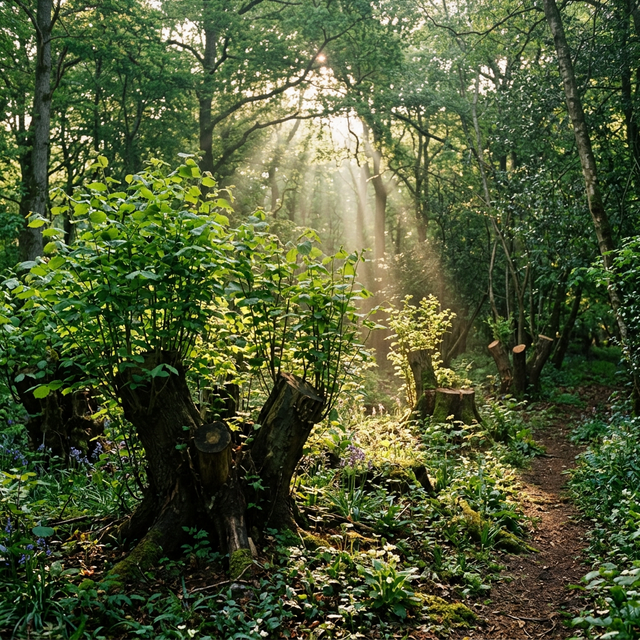
If you own a small 5- or 10-acre woodlot, you might think you don�t have enough trees to supply yourself with continuous firewood or fencing materials without eventually clear-cutting your property. But for thousands of years in Europe, small communities managed to extract massive amounts of timber from tiny patches of forest indefinitely.
Their secret? Coppicing and pollarding.
These ancient woodland management techniques rely on the incredible regenerative power of certain broadleaf trees to send out rapid, vigorous new shoots when cut down. In 2026, as landowners look for ultra-sustainable, off-grid ways to manage micro-acreages, these forgotten practices are experiencing a massive resurgence in the permaculture and homesteading communities.
Why should you consider cutting down perfectly good trees just to watch them grow back? Because coppicing produces harvestable wood up to three times faster than letting a tree grow from seed, creating a practically eternal cycle of localized, renewable resources.
1. What is Coppicing?
Coppicing is the practice of cutting a young, broadleaf tree down to its base (the "stool") while it is dormant in the winter. In the spring, the tree�s massive, established root system pumps immense energy into the stump, causing it to erupt with dozens of rapidly growing straight shoots.
Depending on the species and the size of the wood you need, these shoots are harvested every 3 to 15 years, and the cycle repeats indefinitely. Some continually coppiced tree stools in England are over 1,000 years old.
Best Species for Coppicing
Not all trees can be coppiced; conifers (pines, spruces, firs) will simply die if cut to the ground. You must use broadleaf deciduous trees.
- Hazel (Corylus): The traditional standard, harvested every 5-7 years for hurdles, wattle fencing, and bean poles.
- Willow (Salix): Harvested every 1-3 years for basket weaving and biomass.
- Chestnut and Oak: Harvested on longer rotations (10-20 years) for durable fence posts and excellent firewood.
- Black Locust (Robinia pseudoacacia): Highly rot-resistant and incredibly fast-growing; arguably the best species for homestead fence posts.
2. What is Pollarding?
Pollarding relies on the exact same biological mechanism as coppicing, but instead of cutting the tree at ground level, the initial cut is made 6 to 10 feet in the air (the "bolling").
Why Pollard instead of Coppice?
Historically, pollarding was used in areas where livestock (like cattle or sheep) or large herbivores (like deer) roamed the woods. If you coppice a tree to the ground, hungry deer will instantly eat all the tender new spring shoots, killing the tree. By pollarding the tree at 8 feet high, the tender new growth is out of reach of browsing animals.
Modern Uses of Pollarding
- Tree Hay (Leaf Fodder): In late summer, pollarded branches of elm, ash, or willow can be cut while full of green leaves. These are dried and fed to sheep or goats in the winter as highly nutritious "tree hay"�a great drought-resilience strategy when pastures burn up.
- Urban/Suburban Shade: Pollarding keeps large trees contained in small boundaries, maximizing sunlight to gardens below while still providing a canopy.
3. How to Start a Coppice Rotation on Your Property
Establishing a "coppice with standards" system (a mix of frequently cut understory trees below widely spaced, mature canopy trees) requires planning.
Step 1: Establish the Rotation (The Coupes)
You don't coppice your entire woodlot at once. You divide it into sections called "coupes." If you are managing oak and black locust for firewood on a 15-year rotation, you divide your woods into 15 small sections. You cut one section entirely to the ground each winter. In year 16, you return to the first section, which has now regrown 15 years' worth of firewood.
Step 2: The Initial Cut
Always cut trees during their winter dormancy (between November and February). Cut the tree clean, leaving a slightly angled stump about 2 to 6 inches above the ground to shed water and prevent rot.
Step 3: Intense Light Management
Coppice shoots need massive amounts of sunlight to grow rapidly. If you cut a single tree in the middle of a dark, dense forest, the shoots will stall and die in the shade. You must create light gaps by cutting an entire coupe (at least a quarter acre) at once to let the sun hit the forest floor.
Step 4: Protection
As mentioned, deer love tender coppice shoots. In North America, you must protect a newly cut coppice stool. Piling the thorny brush and slash from the harvested tree directly over the newly cut stump is an effective and free way to deter deer browsing for the first crucial year.
4. Ecological Benefits
Beyond human resources, coppicing is an incredibly powerful tool for wildlife habitat. By creating a rotation, your small woods will always have patches of varying ages�from open, sun-drenched clearings with explosive spring wildflower growth, to dense thickets of 5-year-old saplings (perfect nesting habitat for songbirds), to mature standing timber. This "structural diversity" supports massively more biodiversity than an unmanaged, dark, uniform forest.
5. Summary and Next Steps
Coppicing and pollarding are not quick fixes; they are long-term commitments to active woodland stewardship. However, they allow small acreage owners to be entirely self-sufficient in firewood, fencing, and craft materials without ever degrading their forest ecosystem.
Action Steps:
- Identify 3 or 4 fast-growing broadleaf trees (like maples, oaks, or willows) on a sunny edge of your property to run a small trial.
- Wait until deep winter dormancy to make your cuts, ensuring crisp, angled cuts close to the ground.
- Observe the regrowth next spring, ensuring you protect the tender shoots from deer.
To learn more about maximizing the value of your small woodlot, explore our guides on Mushroom Foraging and Forest Farming or managing Wildlife Habitat.
Sources & Further Reading
- Penn State Extension - Coppicing and Pollarding for Biomass and Fodder: extension.psu.edu
- Cornell Small Farms Program - Reviving the Ancient Art of Coppicing: smallfarms.cornell.edu
- Savory Institute - Tree Fodder and Holistic Grazing Integration: savory.global
- USDA National Agroforestry Center - Woodland Management Techniques: fs.usda.gov
Written by Dr. Sarah Mitchell, Senior Editor & Land Management Specialist at LandHelp.info. Dr. Mitchell blends modern forestry research with traditional woodland skills to help landowners build sustainable, productive ecosystems.
Tags:

Dr. Sarah Mitchell
Senior Editor & Land Management Specialist
Dr. Mitchell has over 20 years of experience in natural resource management, with expertise in sustainable agriculture and forest stewardship. She holds a Ph.D. in Natural Resource Management from Colorado State University and has worked with the USDA NRCS for 15 years.
You Might Also Like
Related Resources
External tools, guides, and references related to this topic
Silviculture Guide to Species
Detailed silvicultural guides for major North American tree species. Covers regeneration, growth, and management of various forest types.
Forest Carbon Credits 101
Comprehensive guide to forest carbon credit programs. Learn how to enroll your forest land, measure carbon sequestration, and sell carbon credits.
Agroforestry Practices
Technical guides for implementing agroforestry systems including alley cropping, silvopasture, windbreaks, and forest farming.
Tree Planting Calculator
Calculate spacing, number of trees needed, and costs for reforestation projects. Includes species-specific recommendations.