Capturing and Storing Rainwater on Small Properties: A Legal and Practical Guide
Learn how to legally and effectively harvest rainwater on your property. Covers collection systems, storage tanks, and navigating complex state water rights.
Capturing and Storing Rainwater on Small Properties: A Legal and Practical Guide
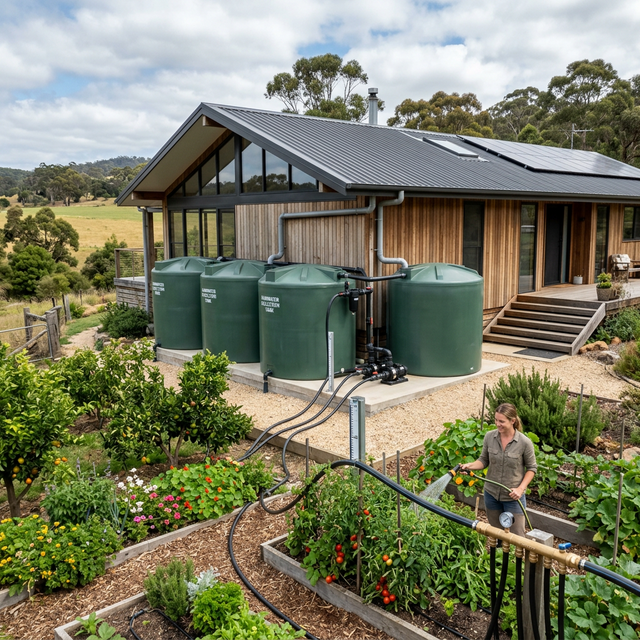
As regional droughts become more severe and municipal water restrictions grow tighter in 2026, rural and suburban landowners are increasingly looking to the sky for self-reliance. Capturing rainwater from your roof is one of the most effective ways to lower your utility bills, provide emergency water for livestock, and maintain gardens when the rain stops falling.
However, rainwater harvesting is not as simple as placing a barrel under a downspout. On a functional scale, it requires precise math involving roof catchment area, rainfall averages, and proper filtration. More importantly, depending on where you live in the United States, caching rainwater might violate complex, century-old water rights laws.
Why is understanding this critical? Because investing thousands of dollars in a massive cistern system only to be slapped with a state cease-and-desist order is an expensive mistake. In this guide, we will break down the legal landscape of rainwater harvesting and provide a practical roadmap for designing a robust, safe storage system for your property.
1. The Legal Landscape: Who Owns the Rain?
In the United States, water law is dictated at the state level, and the rules governing rainwater harvesting vary wildly depending on whether you live in the humid East or the arid West.
Riparian Rights vs. Prior Appropriation
- Eastern States (Riparian Rights): Generally, if water touches your land, you have the right to reasonable use. Rainwater harvesting is heavily encouraged, completely legal, and often incentivized through state grants or tax rebates.
- Western States (Prior Appropriation): The rule of "first in time, first in right" dominates. Decades ago, "senior water right" holders (often large agricultural operations or municipalities) laid claim to water before it even fell from the sky, assuming rain hitting roofs would eventually flow into their streams.
Strict Regulations (The "Trouble" States)
If you live in Colorado, Utah, or Washington, you must navigate a strict legal framework:
- Colorado: Rainwater harvesting was mostly illegal until recently. Now, most residential homeowners are limited to capturing just 110 gallons at a time across two barrels, solely for outdoor use on the property where it was collected. Larger catchment requires explicit well-permit exemptions.
- Utah: Registration is required. You can collect up to 2,500 gallons directly, but you must register with the Division of Water Rights.
- Washington: Rainwater harvesting is generally allowed, but only if it does not negatively impact existing senior water rights. Some specific river basins have strict prohibitions.
Always check your state's Department of Ecology or Division of Water Resources website before buying a large tank. You can start by reviewing our Water Rights Database resource.
2. The Math: How Much Can You Actually Catch?
A 50-gallon rain barrel will irrigate a small tomato patch for about three days during a hot summer. For serious land management�watering livestock, orchard irrigation, or fire defense�you need thousands of gallons of storage.
The Catchment Formula
The formula for calculating potential rainwater yield is surprisingly simple:
Roof Square Footage × Rainfall in Inches × 0.623 = Gallons Collected
(The 0.623 is a conversion factor derived from 1 inch of water covering 1 square foot equaling 0.623 gallons).
Example Calculation: You have a pole barn with a 1,200 sq. ft. metal roof. You receive a modest 1-inch rainstorm. 1,200 sq. ft. × 1 inch × 0.623 = 747 gallons
A single, typical rainstorm can easily overwhelm small barrels. A 1,200 sq. ft. roof in an area receiving 30 inches of annual rain can shed nearly 22,000 gallons a year. To make use of this, your scale must match your catchment.
3. Core Components of a Harvesting System
A functional system to handle agricultural or large-scale garden irrigation requires more than just a barrel. It requires a sequence of components to keep the water clean and usable over months of storage.
1. The Catchment Surface (The Roof)
- Metal Roofs: Ideal. They are smooth, shed water quickly, and don't leach chemicals.
- Asphalt Shingles: Fine for non-potable outdoor irrigation, but they leach petroleum compounds and grit. Do not use for potable water or sensitive hydroponics without serious filtration.
2. Gutters and Leaf Guards
Gutters must be sized correctly (usually 5-inch or 6-inch) to handle torrential downpours without overflowing. Leaf guards are mandatory to prevent debris from washing into the system and rotting in your tank.
3. The "First Flush" Diverter (Crucial)
When it first starts raining, the water washes bird droppings, dust, and pollen off your roof. You do not want this "first flush" rotting in your pristine holding tank. A first flush diverter is a simple PVC pipe mechanism that catches the first 10-20 gallons of dirty water and seals it off, allowing only the subsequent clean water to flow into your main tank.
4. The Storage Tank (Cistern)
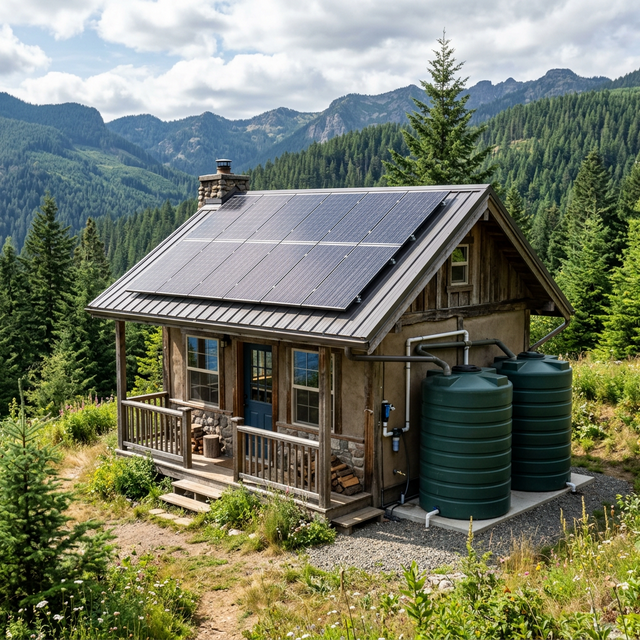
- High-Density Polyethylene (HDPE) Tanks: The gold standard for affordability and durability. Ensure they are opaque (usually dark green or black) to prevent sunlight penetration, which causes algae blooms.
- IBC Totes (275 Gallons): A favorite among DIYers due to low cost. However, they are translucent white, meaning you must paint them black or cover them with a tarp to prevent explosive algae growth.
5. Overflow Management
When your 1,000-gallon tank is full, the next 2 inches of rain have to go somewhere. The overflow pipe must match the diameter of the intake pipe and be piped safely away from the tank's foundation and your home to prevent localized flooding and erosion.
4. Maintenance and Safety
Stored rainwater is generally safe for irrigating soil, but it is not potable (safe for drinking) without extensive UV sterilization and micron filtration.
- Mosquito Control: Every intake and overflow pipe must be covered with fine metal mesh. A rainwater tank can breed thousands of mosquitoes in weeks if left unguarded. For added safety, drop "Mosquito Dunks" (Bti bacteria) into the tank; they are safe for gardens and animals and kill mosquito larvae.
- Cleaning: Empty and scrub the bottom of your tanks once a year to remove the fine silt that inevitably makes it past your first flush diverter.
5. Summary and Next Steps
Capturing rainwater off your outbuildings is a brilliant strategy for drought resilience, giving you control over hundreds of gallons of free irrigation water. Just ensure you scale the system to the math of your roof and explicitly double-check Western state water laws before installing large-capacity cisterns.
Action Steps:
- Check your state's specific water rights laws regarding residential catchment.
- Measure the square footage of your garage or barn roof and run the catchment formula.
- Identify a level, stable location near your garden or pasture that can support a massive amount of weight (1,000 gallons of water weighs over 8,300 pounds).
For more strategies on water conservation, explore our Water Resources guides on pond management and irrigation design.
Sources & Further Reading
- American Rainwater Catchment Systems Association (ARCSA) - Design Guidelines: arcsa.org
- Texas A&M AgriLife Extension - Rainwater Harvesting Guidelines: rainwaterharvesting.tamu.edu
- Colorado Division of Water Resources - Rainwater Collection Rules: water.state.co.us
- University of Arizona Cooperative Extension - Harvesting Rainwater for Landscape Use: extension.arizona.edu
Written by Prof. James Chen, Contributing Expert - Water Resources at LandHelp.info. With 25 years of academic research in hydrology, Professor Chen specializes in sustainable watershed management and water conservation on agricultural lands.
Tags:

Prof. James Chen
Contributing Expert - Water Resources
Professor Chen is a leading expert in watershed management and water conservation. With 25 years in academic research and extension, he has published extensively on sustainable water management practices for agricultural lands.
You Might Also Like
Related Resources
External tools, guides, and references related to this topic
Pond Management Handbook
Comprehensive guide to pond construction, stocking, and management. Covers everything from site selection to fish stocking rates and water quality management.
NRCS Wetland Restoration
Technical guides and financial assistance programs for wetland restoration on private lands. Includes design specifications and plant selection guides.
Water Rights Database
Interactive database for researching water rights by state. Essential for understanding your legal water usage rights and restrictions.
Irrigation System Design Calculator
Free online calculator for designing efficient irrigation systems. Calculates flow rates, pressure requirements, and pipe sizing.