Best Native Trees to Plant for Timber, Wildlife, and Carbon Credits
Discover the best native trees to plant on your private land for timber value, wildlife habitat, and carbon credit eligibility. Includes species-by-region guide and planting tips.
Best Native Trees to Plant for Timber, Wildlife, and Carbon Credits
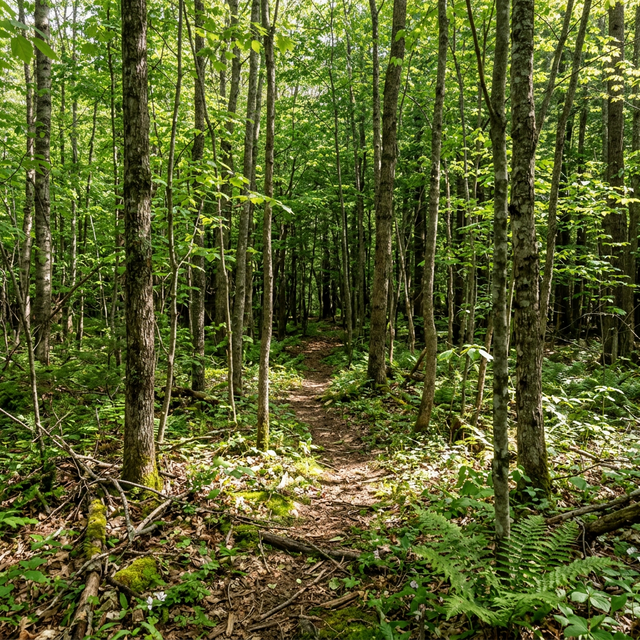
Planting trees is one of the most impactful things a private landowner can do — but only if you plant the right trees in the right places. The wrong species choice costs you money, time, and often the planting itself when trees that don't match local soil and climate conditions die within 5 years.
This guide focuses on native trees — species that evolved in their local ecosystems and are adapted to local soils, pests, and climate. Native trees outperform exotic species in wildlife value, long-term survival, and ecological function. Many also qualify for carbon credit programs that can generate ongoing income.
Why Native Trees Outperform Exotic Plantings
According to research from the US Forest Service and university extension programs:
- Native trees provide 20–50x more wildlife value than non-native ornamentals (Dr. Doug Tallamy's research, University of Delaware)
- Native species require little to no irrigation once established — they're adapted to local rainfall patterns
- Native timber species (oak, walnut, cherry) command premium prices in sawmill and veneer markets
- Native trees are eligible for most USDA NRCS cost-share programs — exotic plantings typically are not
Top Native Trees by Primary Goal
Best Native Trees for Timber Value
Eastern Black Walnut (Juglans nigra)
Range: Eastern U.S., Midwest
Timber value: Extremely high — veneer-grade walnut sells for $2–$5 per board foot or more
Growth rate: Moderate (30–40 years to merchantable size)
Bonus: Nuts are valuable wildlife food; nut harvest can generate early income
White Oak (Quercus alba)
Range: Eastern U.S.
Timber value: High — premium hardwood for flooring, furniture, cooperage
Growth rate: Slow to moderate (40–60 years to timber)
Bonus: Acorns are the single most important wildlife food in Eastern forests — deer, turkey, and over 100 bird species depend on them
Tulip Poplar / Yellow Poplar (Liriodendron tulipifera)
Range: Eastern U.S.
Timber value: Moderate — fast-growing, used for pallets, pulp, some furniture
Growth rate: Fast (one of the fastest-growing Eastern hardwoods)
Best for: Landowners who want income within 20–30 years
Ponderosa Pine (Pinus ponderosa)
Range: Western U.S.
Timber value: High — major commercial species in Western forests
Growth rate: Moderate
Bonus: Excellent for carbon programs; fire-adapted once established
Longleaf Pine (Pinus palustris)
Range: Southeastern U.S. (historic range restoration)
Timber value: High — dense, strong wood; extremely durable
Growth rate: Slow initially (up to 7-year "grass stage"), then moderate
Bonus: Qualifies for multiple conservation programs; critical habitat for red-cockaded woodpeckers
Best Native Trees for Wildlife Habitat
Bur Oak (Quercus macrocarpa)
Range: Central U.S., Midwest
Wildlife value: Exceptional — large, sweet acorns consumed by deer, turkey, and waterfowl
Drought tolerance: Very high — ideal for dry Midwestern sites
Eastern Red Cedar (Juniperus virginiana)
Range: Eastern U.S.
Wildlife value: Very high — dense berry crops for waxwings and other birds; excellent winter cover
Note: Can be invasive in grassland settings; plant strategically, not in open prairies
American Plum (Prunus americana)
Range: Central U.S.
Wildlife value: High — thicket-forming shrub/small tree; fruit for deer, turkey, bear
Best for: Edge plantings, food plot borders
Serviceberry / Juneberry (Amelanchier spp.)
Range: Most of U.S.
Wildlife value: Very high — early-ripening fruit beloved by over 40 bird species
Size: Small tree/shrub, great for understory planting
Wild Persimmon (Diospyros virginiana)
Range: Eastern and Central U.S.
Wildlife value: Exceptional for deer, raccoons, foxes — fruits ripen in fall during hunting season
Best for: Deer habitat improvement plantings
Best Native Trees for Carbon Credit Programs
For carbon credit eligibility, trees must typically:
- Be planted on land that was not recently forested
- Meet minimum stocking density requirements
- Be enrolled in a recognized carbon standard (ACR, CAR, Verra)
- Remain standing for 40–100 years depending on the program
Best carbon-credit-eligible native species:
| Species | Region | Carbon Sequestration Rate (lbs CO₂/year/tree at maturity) |
|---|---|---|
| Douglas Fir | Pacific Northwest | 117 lbs |
| Loblolly Pine | Southeast | 90 lbs |
| Black Walnut | East/Midwest | 80 lbs |
| White Oak | East | 75 lbs |
| Ponderosa Pine | West | 65 lbs |
Note: Carbon sequestration rates are averages across regions; actual rates depend heavily on site quality, climate, and stand density. Work with a certified carbon project developer for accurate projections.
Native Trees by Region
Southeastern U.S
- Longleaf Pine (timber, carbon, endangered species habitat)
- Swamp White Oak (wetland edges, excellent acorn producer)
- American Sycamore (streamside, fast-growing, erosion control)
- Bald Cypress (wetlands, extremely long-lived, carbon storage)
Midwest / Great Plains
- Bur Oak (drought-resistant, wildlife)
- Hackberry (tolerates poor sites, great for birds)
- Pecan (native nut tree, Southern Midwest; timber + food value)
- Eastern Cottonwood (riparian zones, fastest-growing native)
Pacific Northwest
- Douglas Fir (premium timber, carbon)
- Red Alder (nitrogen-fixing, great for riparian restoration)
- Big-Leaf Maple (hardwood timber, understory wildlife value)
Mountain West
- Quaking Aspen (clone-forming, critical habitat for 500+ species)
- Gambel Oak (wildlife habitat, shrub-tree form)
- Blue Spruce (wildlife shelter, visual buffer)
New England / Northeast
- Sugar Maple (syrup, premium timber, fall foliage)
- Yellow Birch (high-value hardwood, birds and mammals)
- Eastern White Pine (timber, fast-growing, carbon)
Planting Tips for Success
Site Matching Is Everything
- Test soil pH before planting — most hardwoods prefer pH 5.5–7.0
- Match species to drainage: oaks for uplands, cottonwood/sycamore for wet areas
- Avoid planting timber species in areas prone to flooding unless they're flood-adapted natives
Tree Protection
- Deer browse is the #1 cause of planting failure — use tree tubes, wire cages, or repellents for the first 3–5 years
- Competing vegetation (grass and forbs growing around seedlings) dramatically reduces growth — use weed mats or herbicide release treatments in year 1
USDA Cost-Share Opportunities
NRCS EQIP funds native tree plantings through the Forest Stand Improvement and Tree/Shrub Establishment practices, typically at 50–75% cost-share. Apply at your local NRCS office before planting season.
Summary
Native trees are the single best long-term investment a landowner can make — delivering timber income, wildlife habitat, property value, carbon sequestration, and watershed protection simultaneously. Match species to your region and site conditions, protect seedlings from deer browse, and leverage USDA cost-share funding to reduce upfront costs.
Explore more: Browse our Forests & Woodlands resources or learn about agroforestry on small acreage.
Sources & Further Reading
- US Forest Service — Silvicultural Guides for Tree Species: fs.usda.gov/nrs/silviculture
- University of Delaware — Native Plants and Wildlife Value (Tallamy Research): www.udel.edu/academics/colleges/canr/departments/entomology-wildlife-ecology/faculty-staff/doug-tallamy/
- USDA National Agroforestry Center — Tree Planting Guides: fs.usda.gov/nac
- American Carbon Registry — Forest Carbon Program: americancarbonregistry.org
- Longleaf Alliance — Planting Longleaf Pine: longleafalliance.org
- National Tree Benefit Calculator: treebenefits.com
- USDA NRCS — Tree & Shrub Establishment Practice (612): nrcs.usda.gov
Written by Dr. Sarah Mitchell, Senior Editor & Land Management Specialist at LandHelp.info. Dr. Mitchell holds a Ph.D. in Natural Resource Management from Colorado State University and has over 20 years of experience in forest stewardship and native species restoration.
Tags:
Dr. Sarah Mitchell
Senior Editor & Land Management Specialist
Dr. Mitchell has over 20 years of experience in natural resource management, with expertise in sustainable agriculture and forest stewardship. She holds a Ph.D. in Natural Resource Management from Colorado State University and has worked with the USDA NRCS for 15 years.
You Might Also Like
Related Resources
External tools, guides, and references related to this topic
Silviculture Guide to Species
Detailed silvicultural guides for major North American tree species. Covers regeneration, growth, and management of various forest types.
Forest Carbon Credits 101
Comprehensive guide to forest carbon credit programs. Learn how to enroll your forest land, measure carbon sequestration, and sell carbon credits.
Agroforestry Practices
Technical guides for implementing agroforestry systems including alley cropping, silvopasture, windbreaks, and forest farming.
Tree Planting Calculator
Calculate spacing, number of trees needed, and costs for reforestation projects. Includes species-specific recommendations.